
Cat Tien National Park 2026 Visitor Guide in English

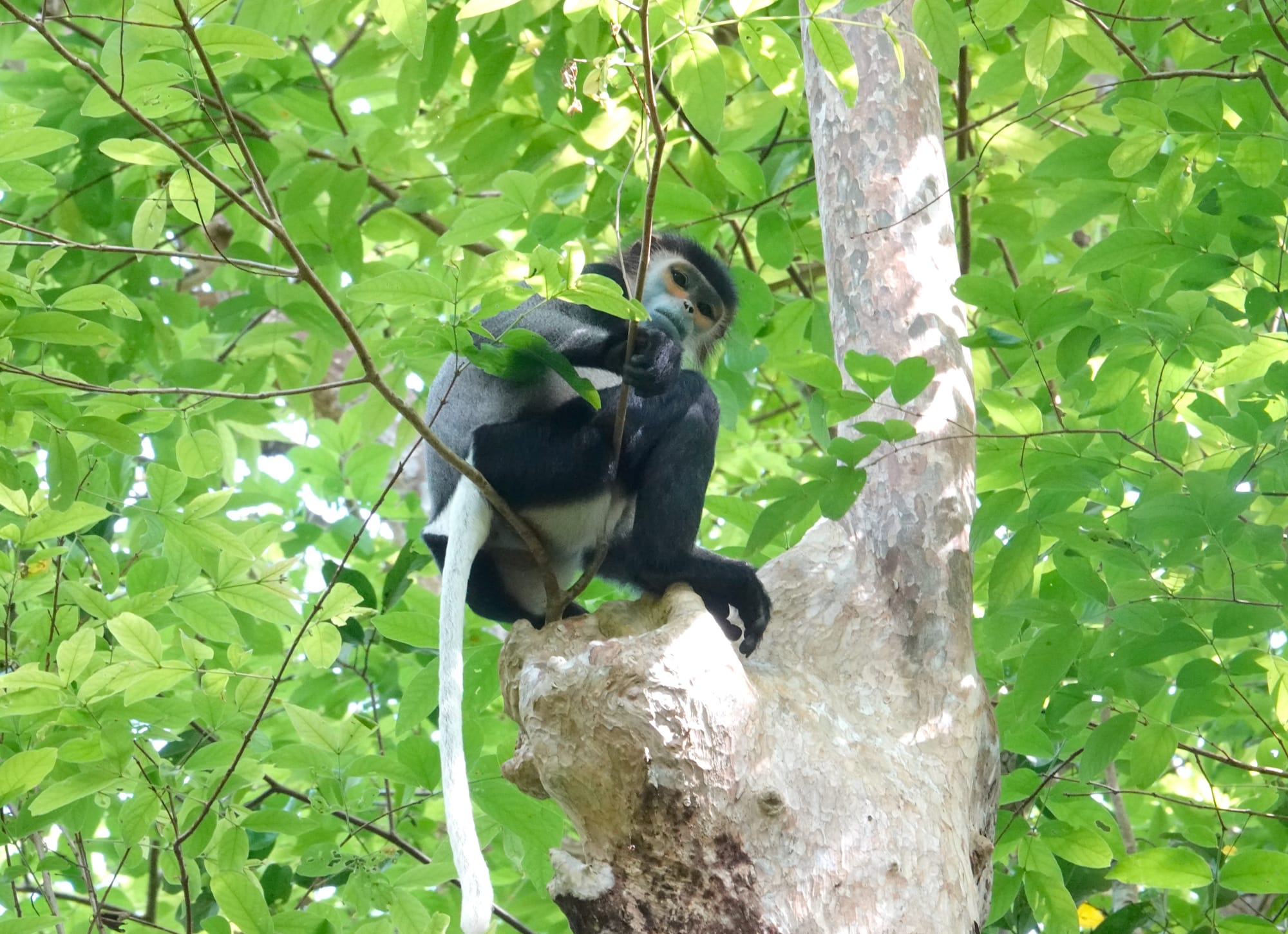
Cat Tien stood out to me as easiest national park in Vietnam for spotting free-roaming wildlife. Gibbons and birds are visible from the visitor center early in the morning, before crowds arrive. Large mammals can be seen just from the roads and with affordable night and morning tours. The primates are easy to spot from places near visitor center and are used to human presence.
If you have a few days to spare and love nature, it's a refreshing escape from Ho Chi Minh City's noise and pollution.
If you speak only English, navigating the park can be challenging as the online booking resources are in Vietnamese. Booking rooms and tours at Cat Tien requires phone or email communication (they seem to be using google translate for mail). This guide covers the practical side of visiting: how to get there, where to stay, transportation costs, activities and wildlife tips. For deeper dives into the park's history, conservation work, biodiversity, and lesser-known spots, I'd recommend checking other sources online. That said, doing some research beforehand really pays off—understanding what you're looking at transforms the experience, and knowing how rare certain wildlife sightings and how biodiversity thrives in this rainforest are makes them hit differently. A park shifts from just a pretty backdrop to feeling like a genuine home for dozens of species.
We had invited Ka Tuyen, a friend who had been a park ranger at Cat Tien National Park for over 12 years but later left the ranger job to pursue her studies, to join our trip. She brought us around the place where she was born in - Cat Tien National Park. It's uncommon to find someone so knowledgeable and experienced with Cat Tien Forest because forest rangers have to retire after a certain age. Part of why she knew the place so well was because she had spent her entire life here since she was born. She is from the Talai village which used to be situated inside Cat Tien National Park before it was moved away for the National Park developments. She is definitely a wonderful easygoing person who knows the wildlife and nature of Cat Tien intimately and has extremely sharp eyes and ears for wildlife. I don't know anyone else who knows the park and wildlife like she does. You may reach out to me (my email in the About tab above) for her contact or you can find and reach out to her directly on her Facebook (mentions a lot about Ta Lai village) if you would like her help during your trip to Cat Tien National Park for some days (which I highly recommend).
Getting There and Transportation
You'll need to reach Nam Cat Tien first, then take a boat across to the park's visitor center.
FUTA Sleeper Buses (Best for comfort)
- Cost: 200,000 VND one way
- Duration: ~5 hours
- Departure point: Ho Chi Minh Nga Tu Ga Bus Station
- Schedule: Buses run every 1–2 hours
- Booking: Purchase tickets online (though you'll pay for the full HCM–Dalat route) or at the ticket counter which is slightly cheaper as you are only paying for part of the route. Book FUTA bus tickets in advance during peak season as demand is high.
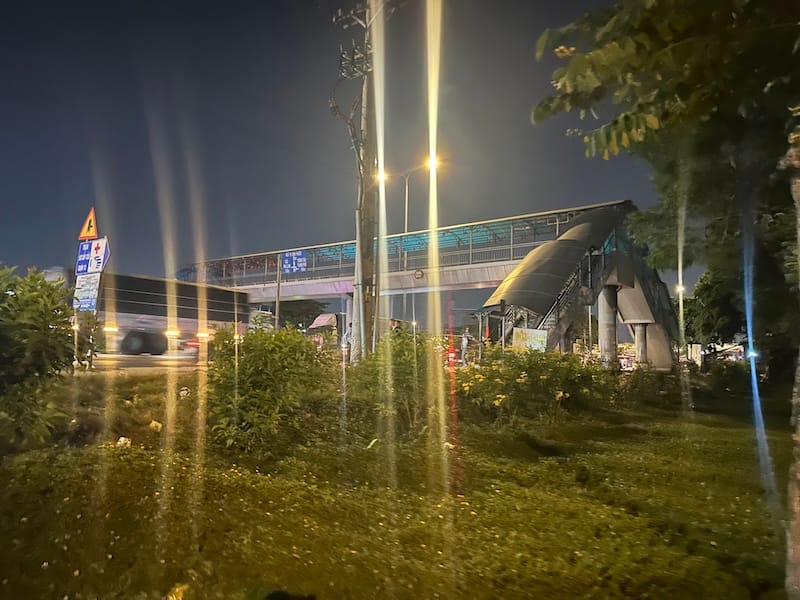
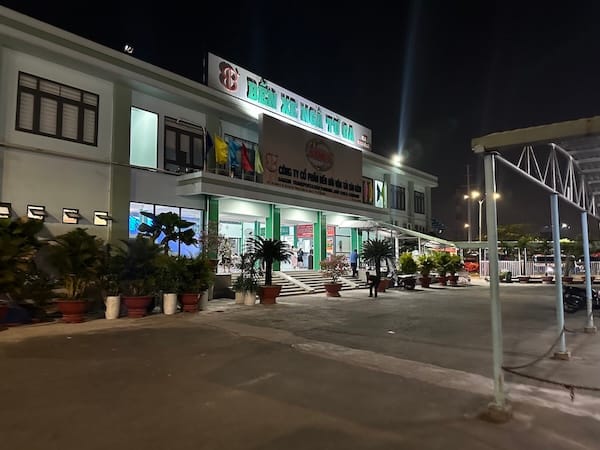
There is an overhead bridge that crosses the highway and brings you the Be XE Nga Tu Ga bus station where you can buy bus tickets
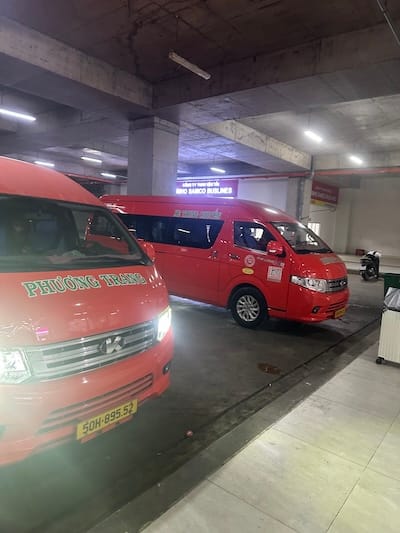
- When boarding, tell the bus attendant you're heading to Nam Cat Tien. The bus drops you at Phuong Lam Futa Office, where a minivan (newly running as of 2025) will take you to your hotel or the park's ticketing office. Show this text to the attendant on your phone: "cho tôi xuống văn phòng Phương Trang Phương Lâm để đi Vườn Quốc Gia Cát Tiên" which means to drop you off at Phuong Lam office to get to Cat Tien National Park
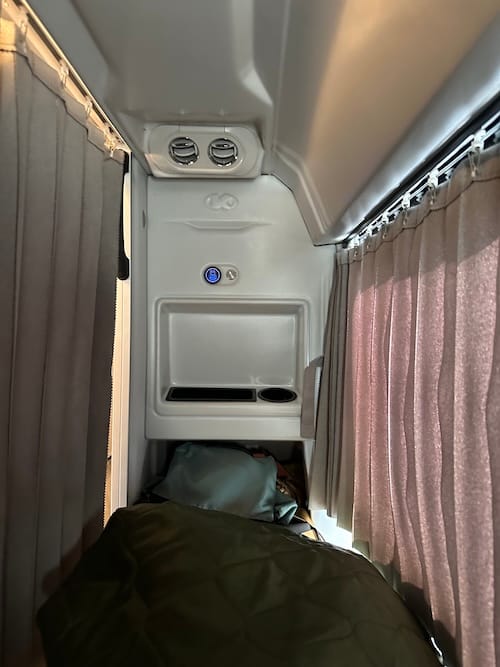
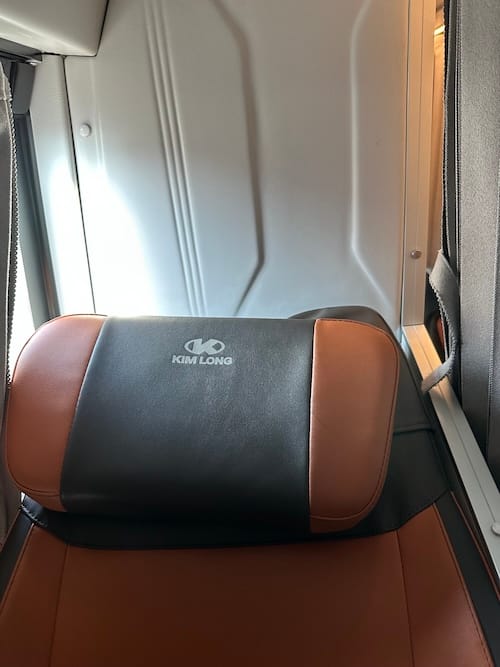
- Halfway through the bus ride, there is a Phuc Loc Rest Stop which has cleantoilets and food (15 minutes break)
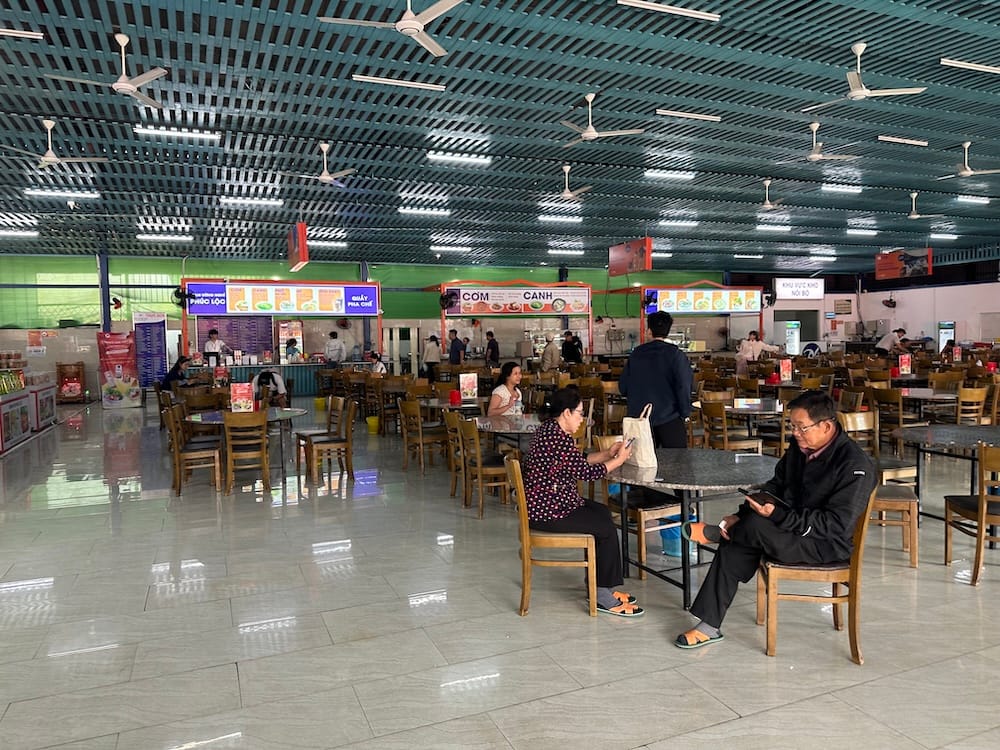
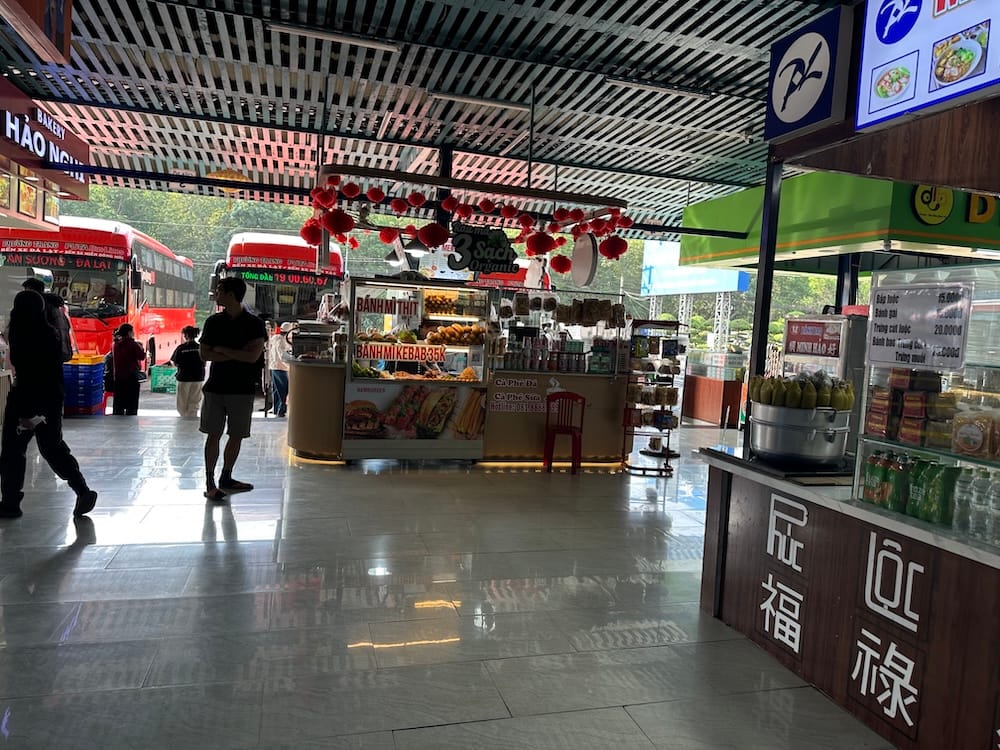
A really nice bus rest stop with tons of ceiling fans

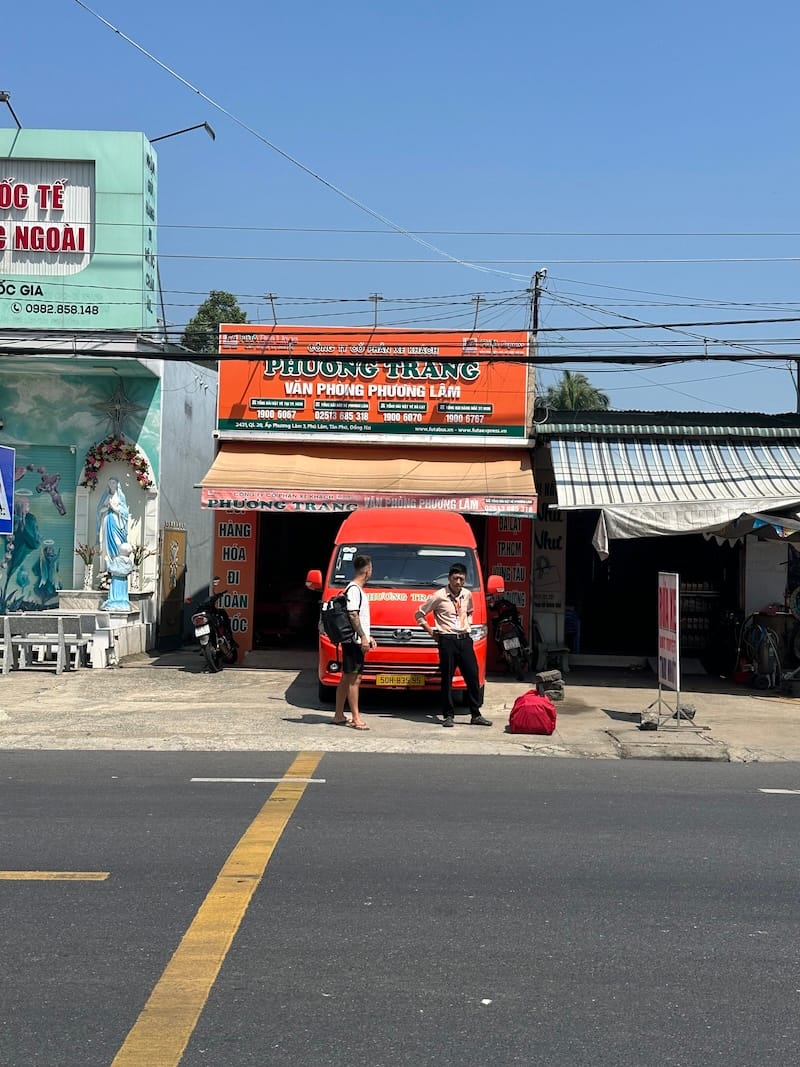
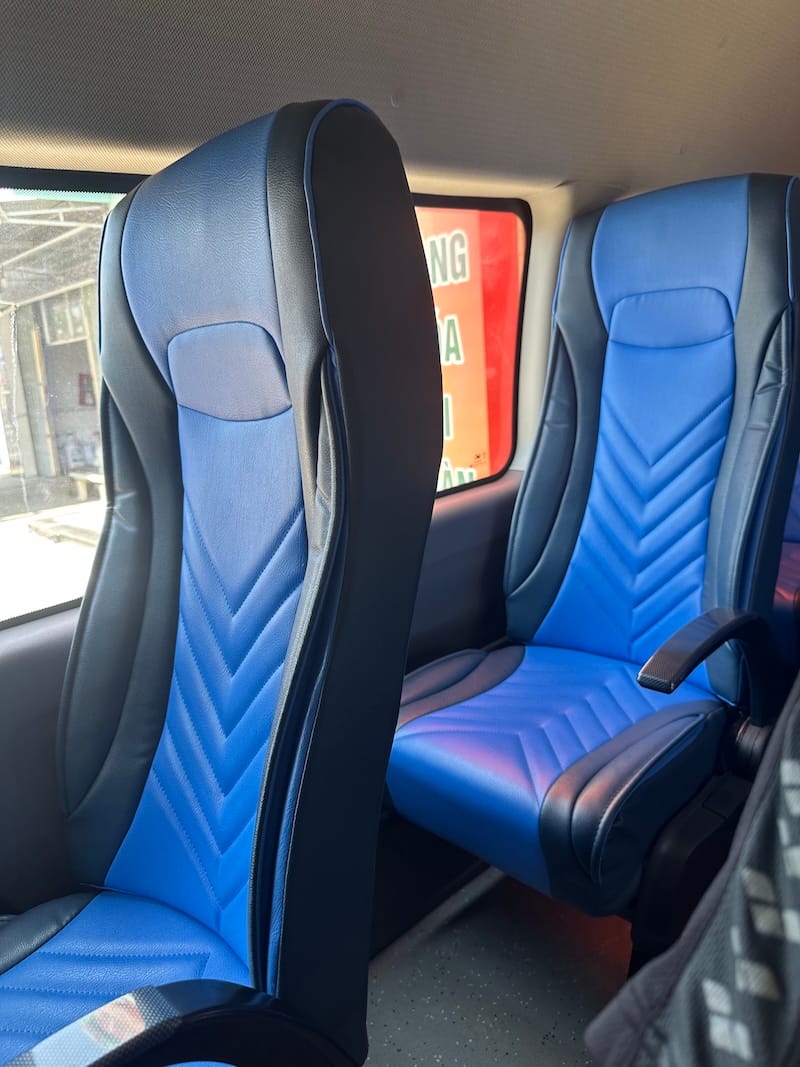
Phuong trang phuong Lam Futa office: a nice bus assistant will help you get on the buses you need to be on. Just show them your ticket. The minivan that takes you from here to the National Park is new and clean.
The mini van can take you to your hotel in Cat Tien National Park or the ferry ticketing office.
On the trip back to Ho Chi Minh, you can take a free shuttle from Be Xe Mien Dong Moi to District 1.
Option 2: seated buses
These options require Vietnamese to communicate, so you can ask your hotel receptionist to communicate with the bus customer service.
Option 1: Taking a bus from HCMC directly to our lodge (cheapest way)
• Kim Hoàn
The seater bus departs from 79 Ly Thuong Kiet street, Tan Binh District . You can book in advance though it is likely not necessary.
• Tâm Kim Hoàn
The seater bus depart from 622 Cach Mang Thang Tam street, District 3 station and you should book it in advance, you can ask your hotel receptionist to call the bus.
• Dũng
Dũng bus depart from Nga Tu Ga bus station ( Bến xe ngã tư ga, 14 Hà Huy Giáp, Thạnh Lộc, An Phú Đông, Hồ Chí Minh, Vietnam ).
• Bé:
Be bus also departs from Nga Tu Ga bus station ( Bến Xe Ngã Tư Ga, Bến xe ngã tư ga, 14 Hà Huy Giáp, Thạnh Lộc, An Phú Đông, Hồ Chí Minh, Vietnam ) and usually don’t need to be booked in advance. Their departure schedule is 8:30 am,10:20 am, 12:50 pm, 14:50 pm, 16:20 pm
So you just need to go to Nga Tu Ga bus bus station, find ticket counters, buy a ticket and get on the bus. Just show the following Vietnamese text to any of the counters, they will show you the ticket counter.“Bạn làm ơn chỉ cho tôi chỗ mua vé xe đi Nam Cát Tiên. Tôi cảm ơn!”**
The price should be 110 000 - 130 000 – 150 000 VND for a ticket.
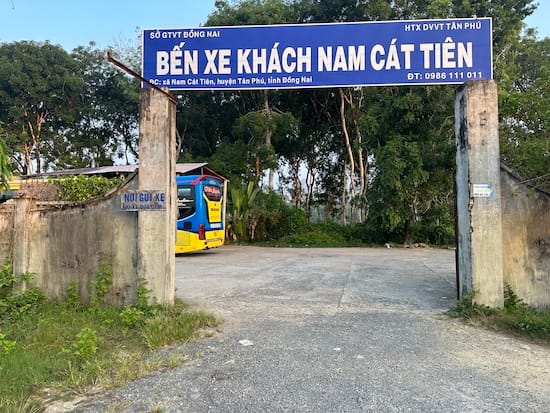
Option 3: Private Car (Most flexible)
- Cost: 1.8–3 million VND one way (depending on vehicle size)
- Benefit: No need to match bus schedules; fastest option
- Drawback: Less comfortable than sleeper buses
For the return journey, you can ask your hotel to book a return bus for a small fee (staff don't speak English). The buses can either pick you up from your hotel or the nearby bus station in Cat Tien (For FUTA, the minivan would pick you up from your hotel or the boat ticket office.)
Boat Ferry to the Park
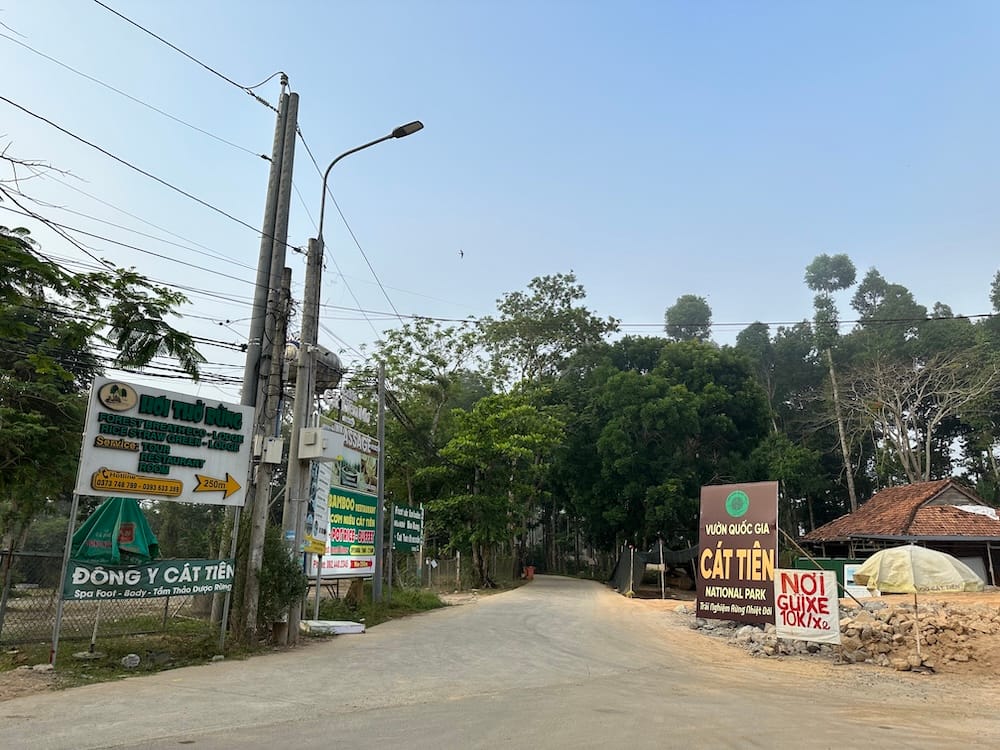
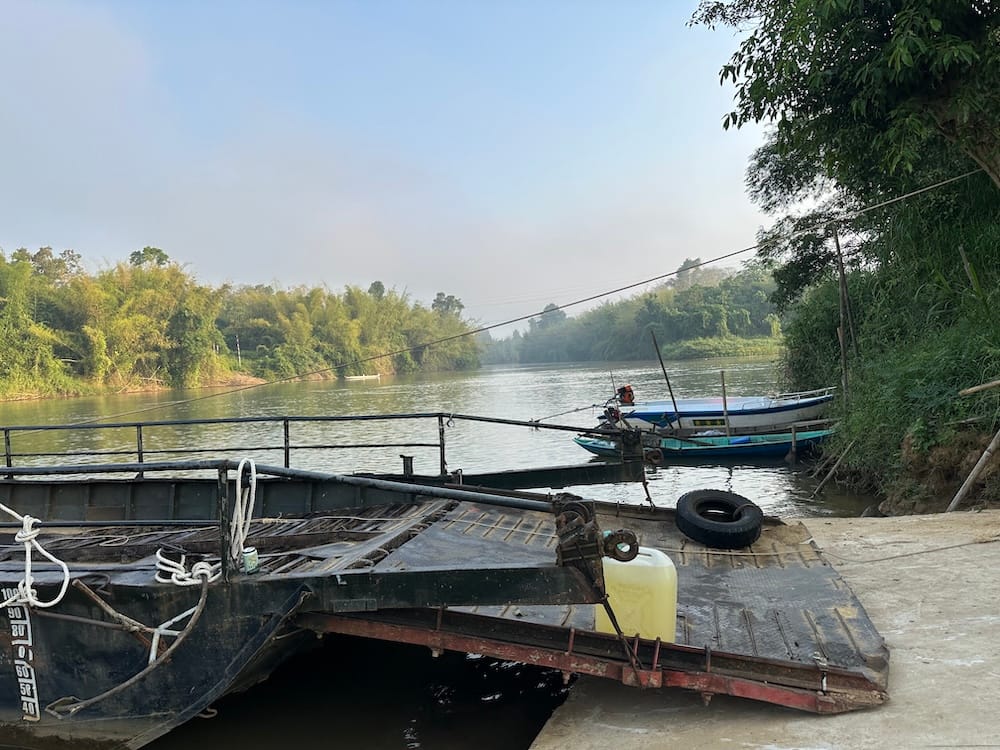
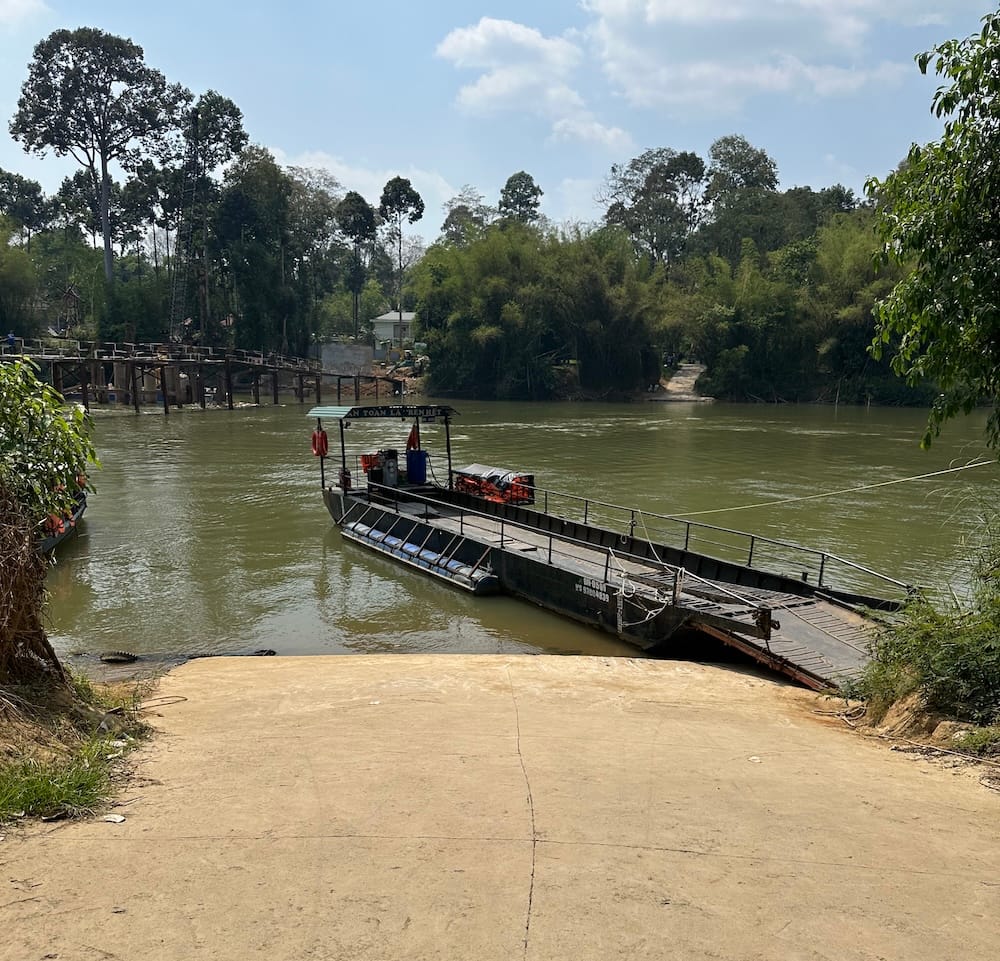
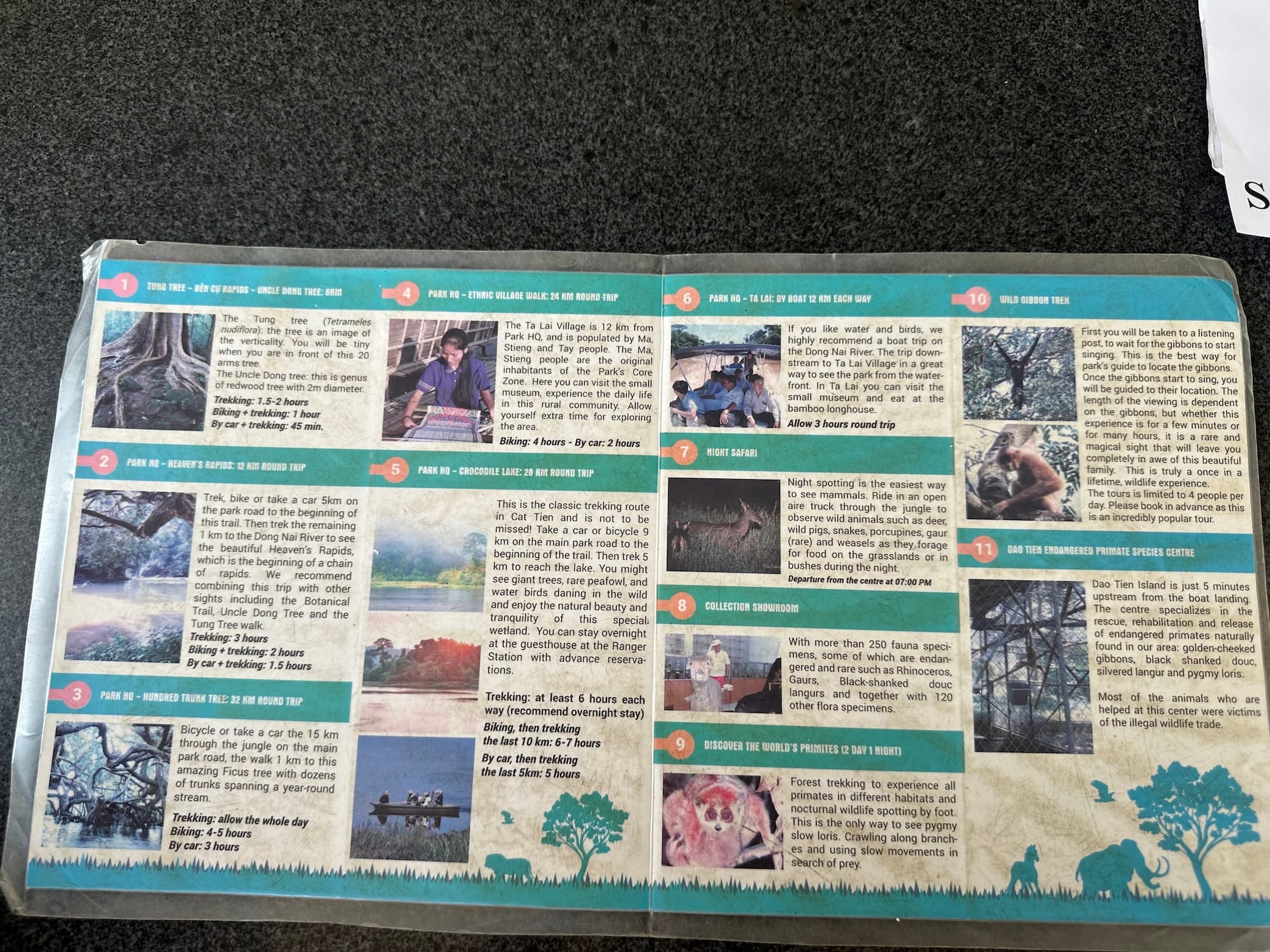
Boat tickets can be purchased near the boat pier.
It is a short 5 minute boat ride just to cross the river. They are currenrly building a bridge to cross the river as off April 2026 and it expected to finish building this year.
One note on fees: entrance costs for foreign visitors aren't cheap, but it's justified only if those earnings directly support conservation rather than just tourism infrastructure.
- Cost: 60,000 VND for each return trip (non-locals)
- Hours: 6:30 am–7:30 pm
- Frequency: Every 5 minutes during peak hours; 30 minutes after 6 pm. Frequency is not really fixed.
- Location: Ticket office is walking distance from most Nam Cat Tien homestays
Where to Stay
Nam Cat Tien (Most tourists stay here)
- Many homestays are a short walk from the ferry terminal to get to Cat Tien National Park.
- Many homestays and restaurants within walking distance of the ferry terminal
- Recommendation: Green Hope Lodge—the owner speaks excellent English, helps with transport bookings, and the riverside garden attracts tons of birds and gibbons
- The homestays here are more modern than the ones offered in the park and there are much more food options here.
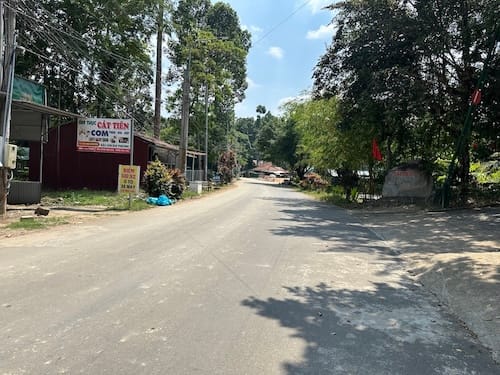
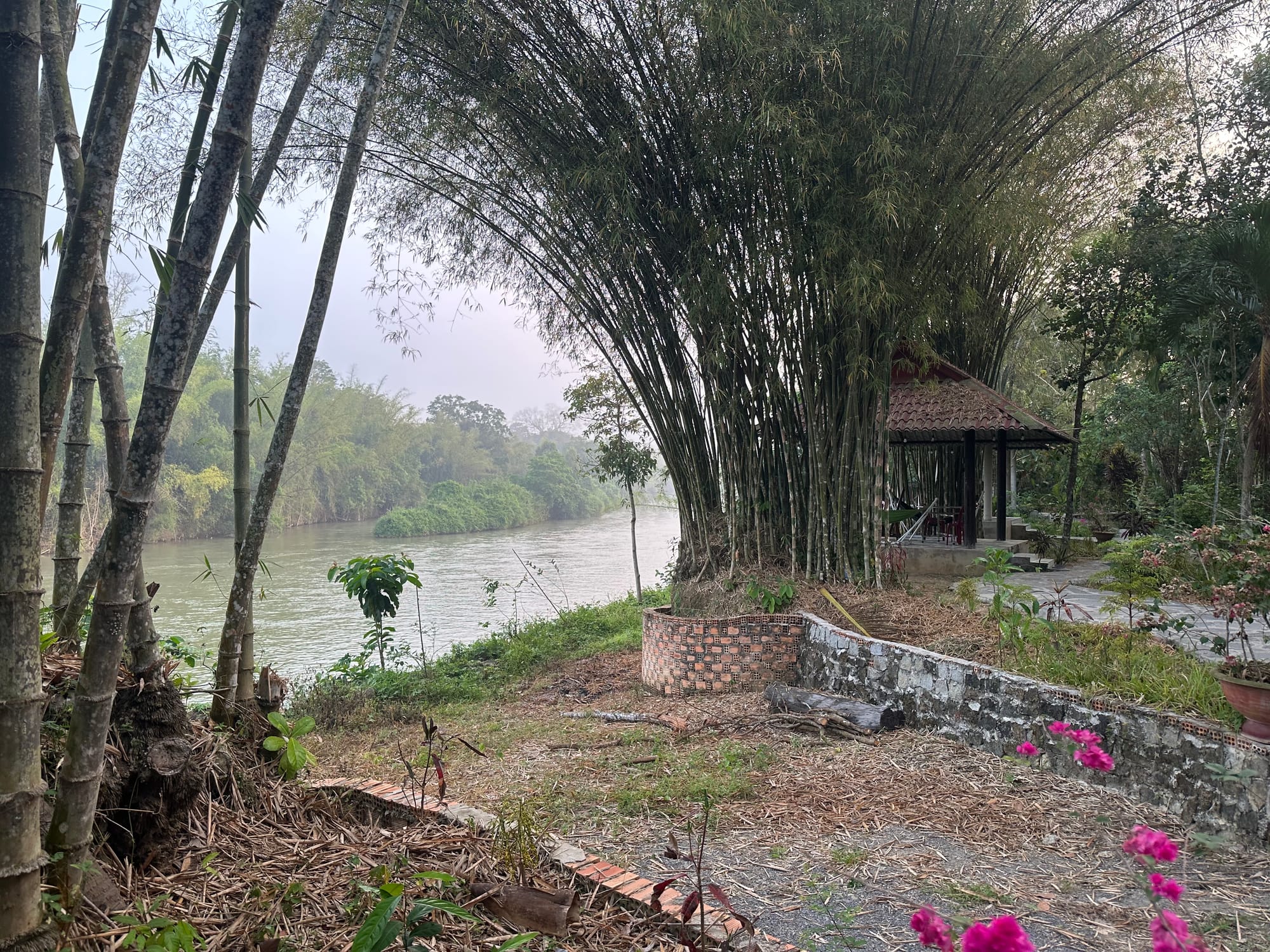
It is a short walk along the road to get to the ferry terminal. Our stay at Green Hope lodge was great
Inside the Park
- Most of the rooms are basic and a little dated, though newly renovated double 08 rooms offer more comfort and modern design. These new rooms need to be booked in advanced as birding tours tend to snap them up.
- Book well ahead for peak season. You can email the contact email on the official Cat Tien National Park website. The newly renovated double rooms runs out early though.
- Staying directly at the National Park is best for wildlife. It lets you explore outside ferry hours where wildlife is the easiest to spot due to the temperatures and the quietness and rest in the rooms during midday heat when wildlife activity is quiet.
- Restaurant food is a little pricier than in Nam Cat Tien, but nothing exhorbitant
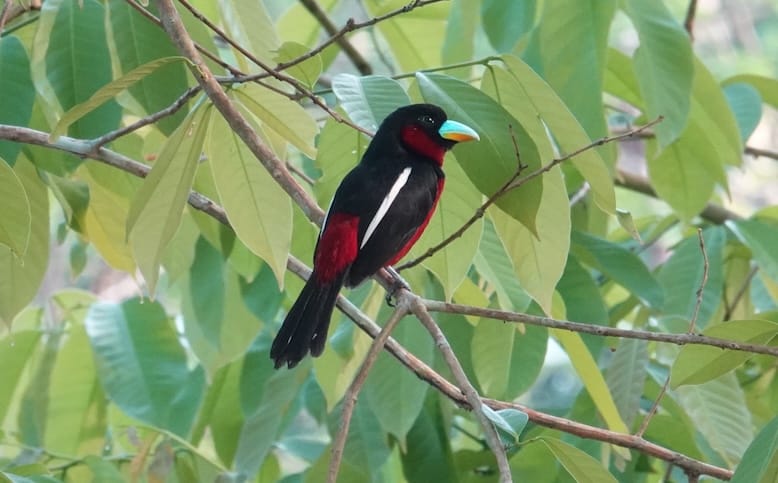
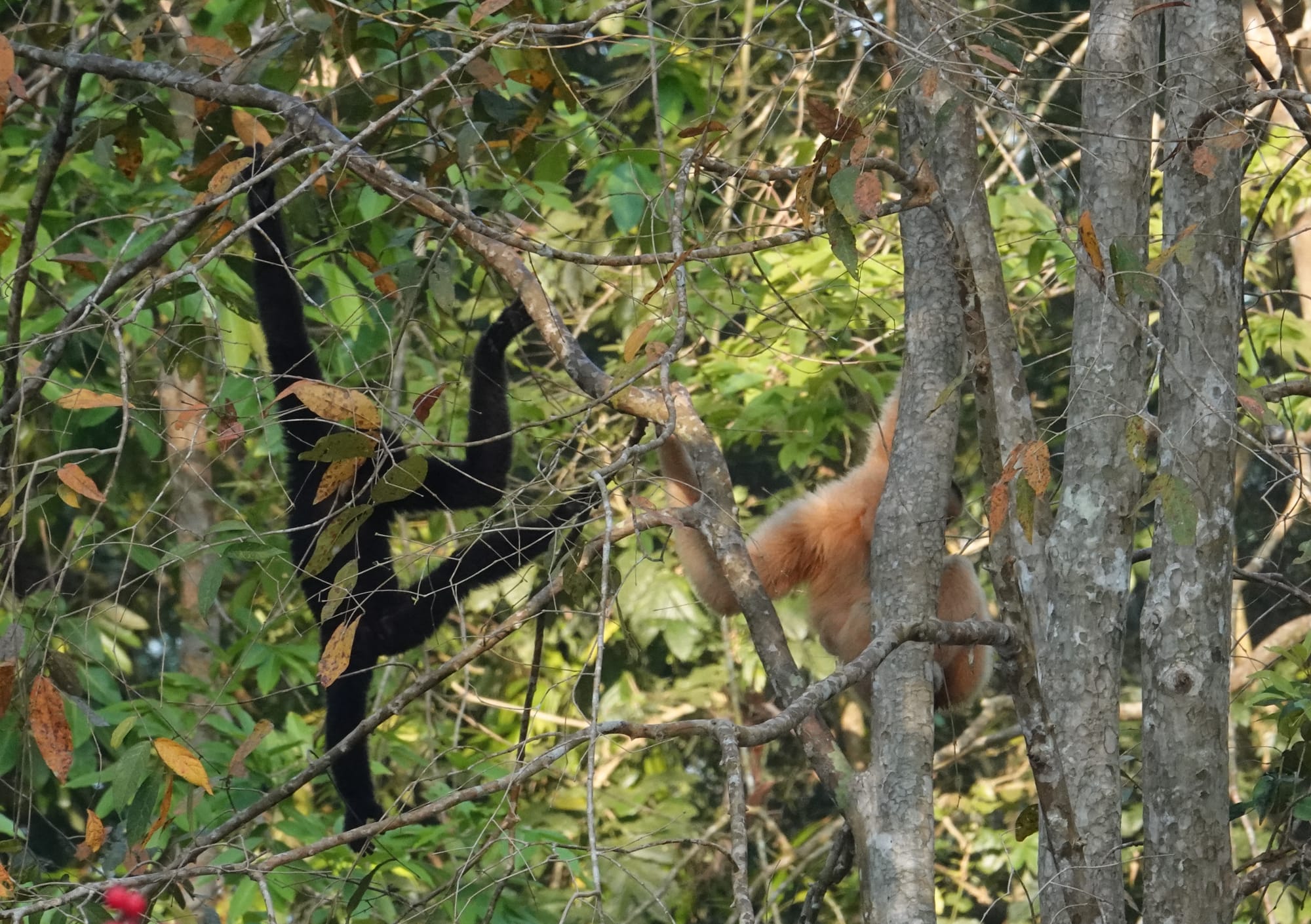
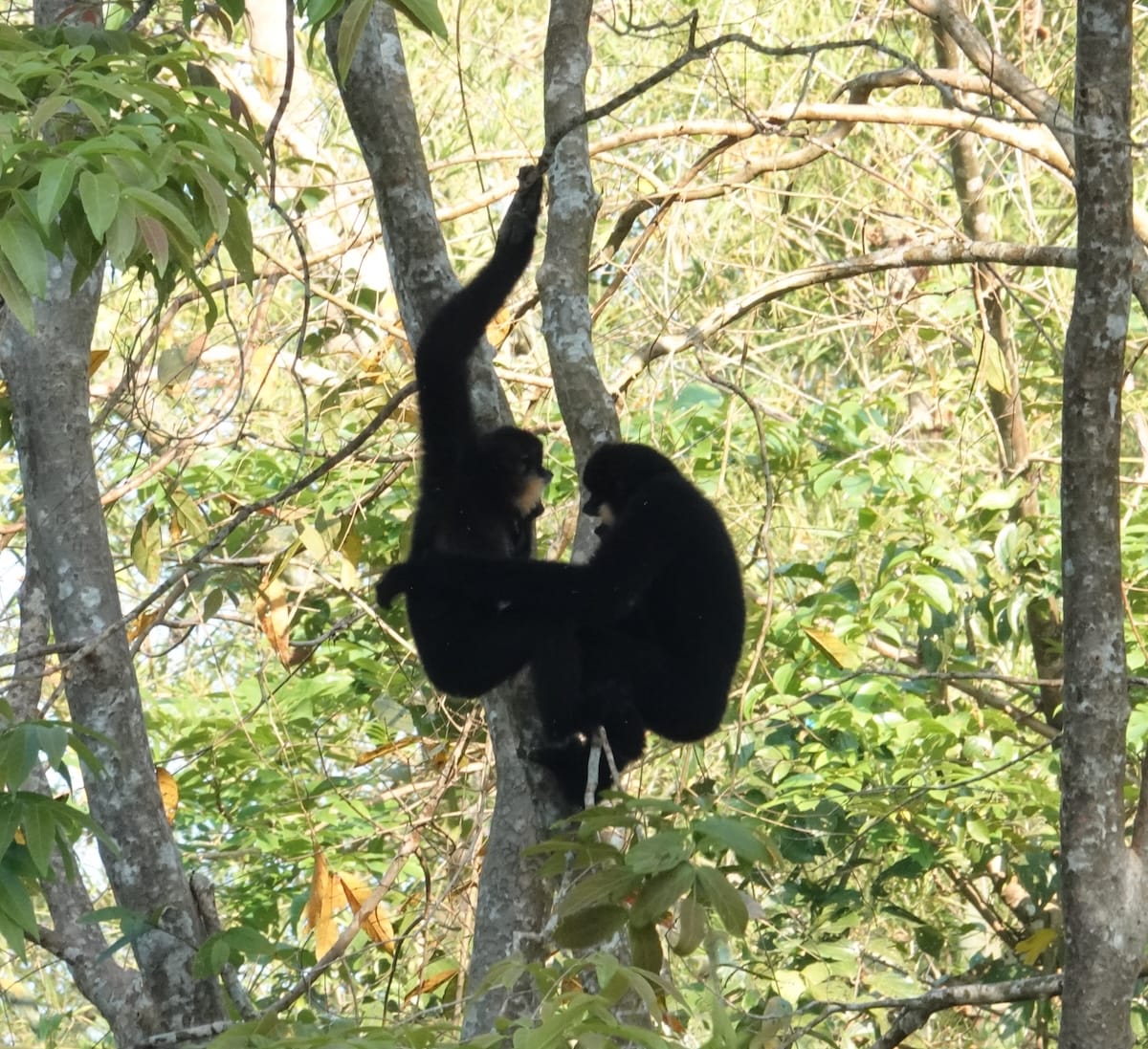
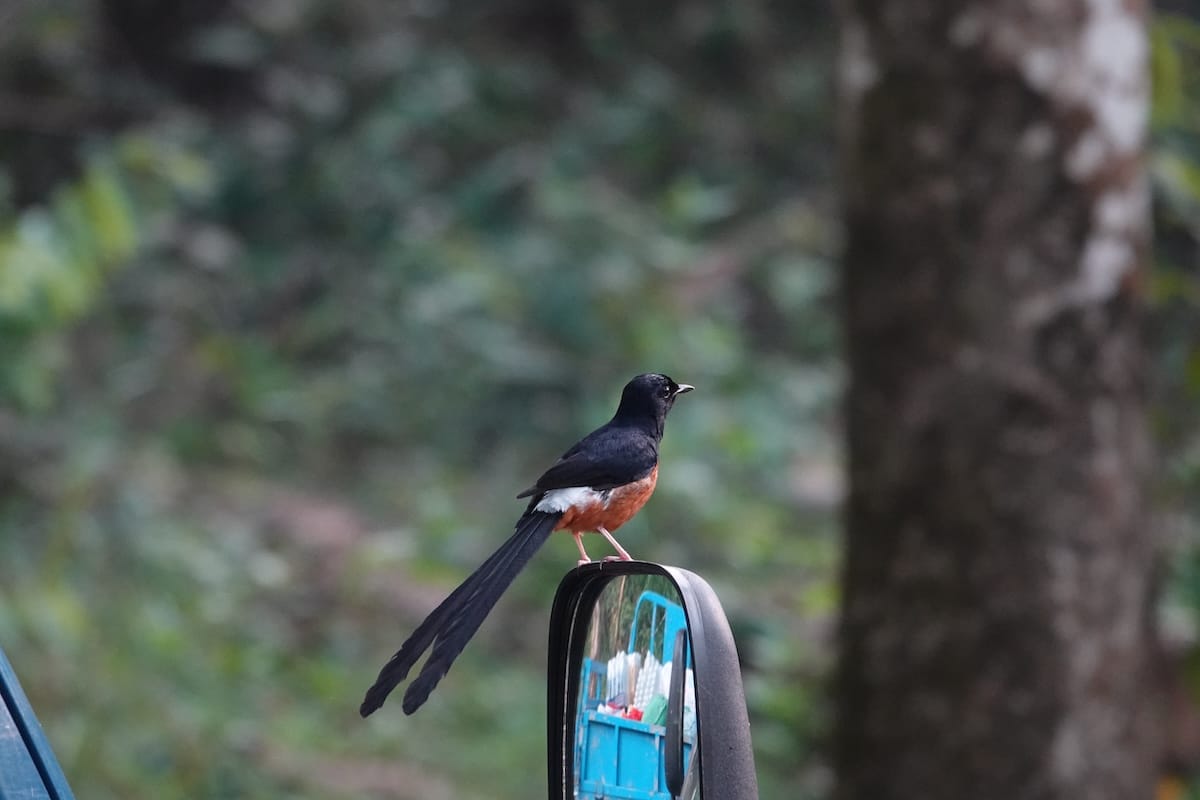
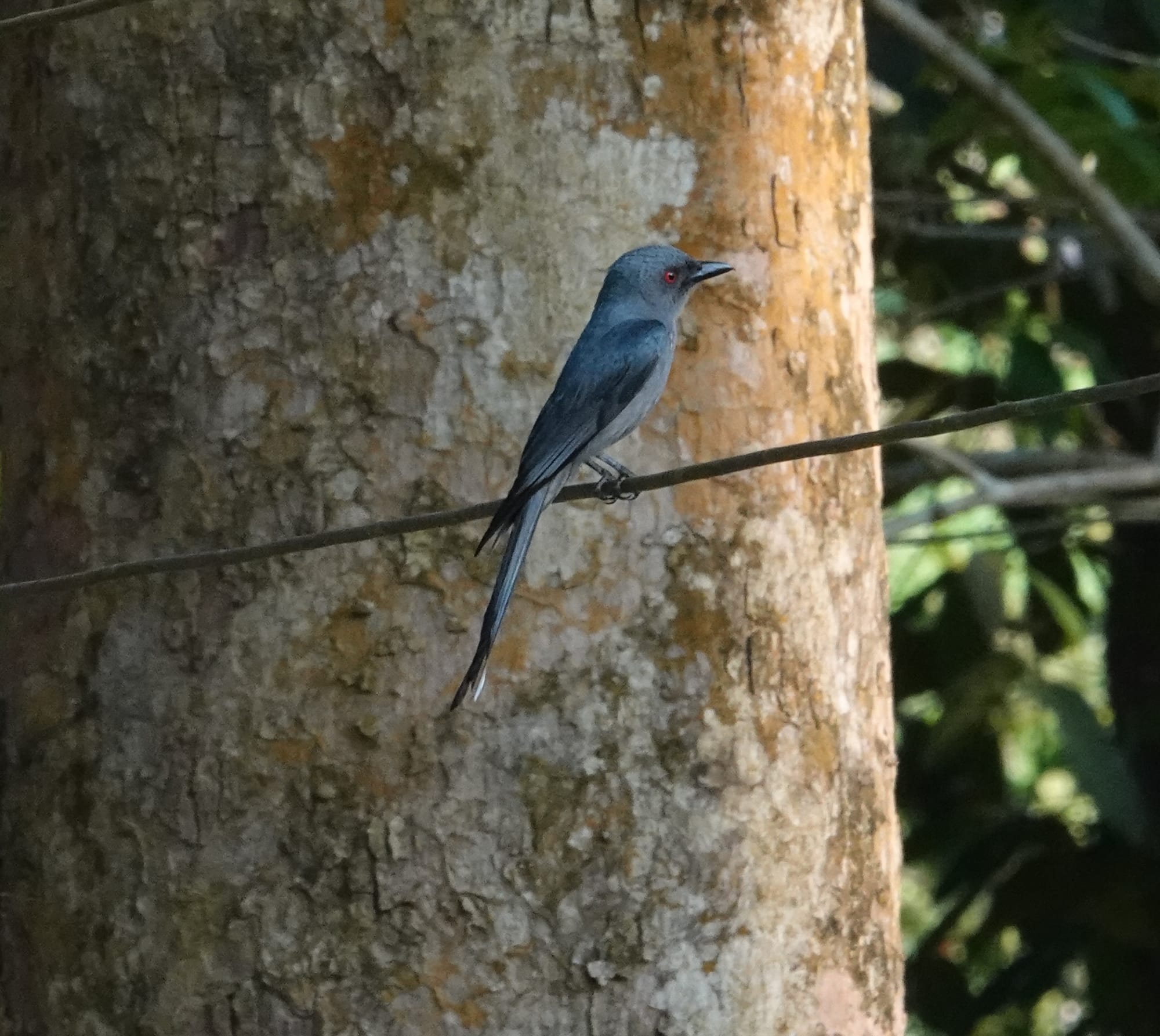
At 7am, there are wild gibbons and birds right at the visitor center.
When to Visit
Best weather: December–March (cool, dry)
Still good: March–April (dry but warmer)
Quieter but wetter: May–November
Skip: Tet holiday and peak weekends (restaurants busier, but transport/rooms get scarce and crowded)
Always avoid weekends if you want to spot wildlife.
Activities and Wildlife Spotting
Cycling
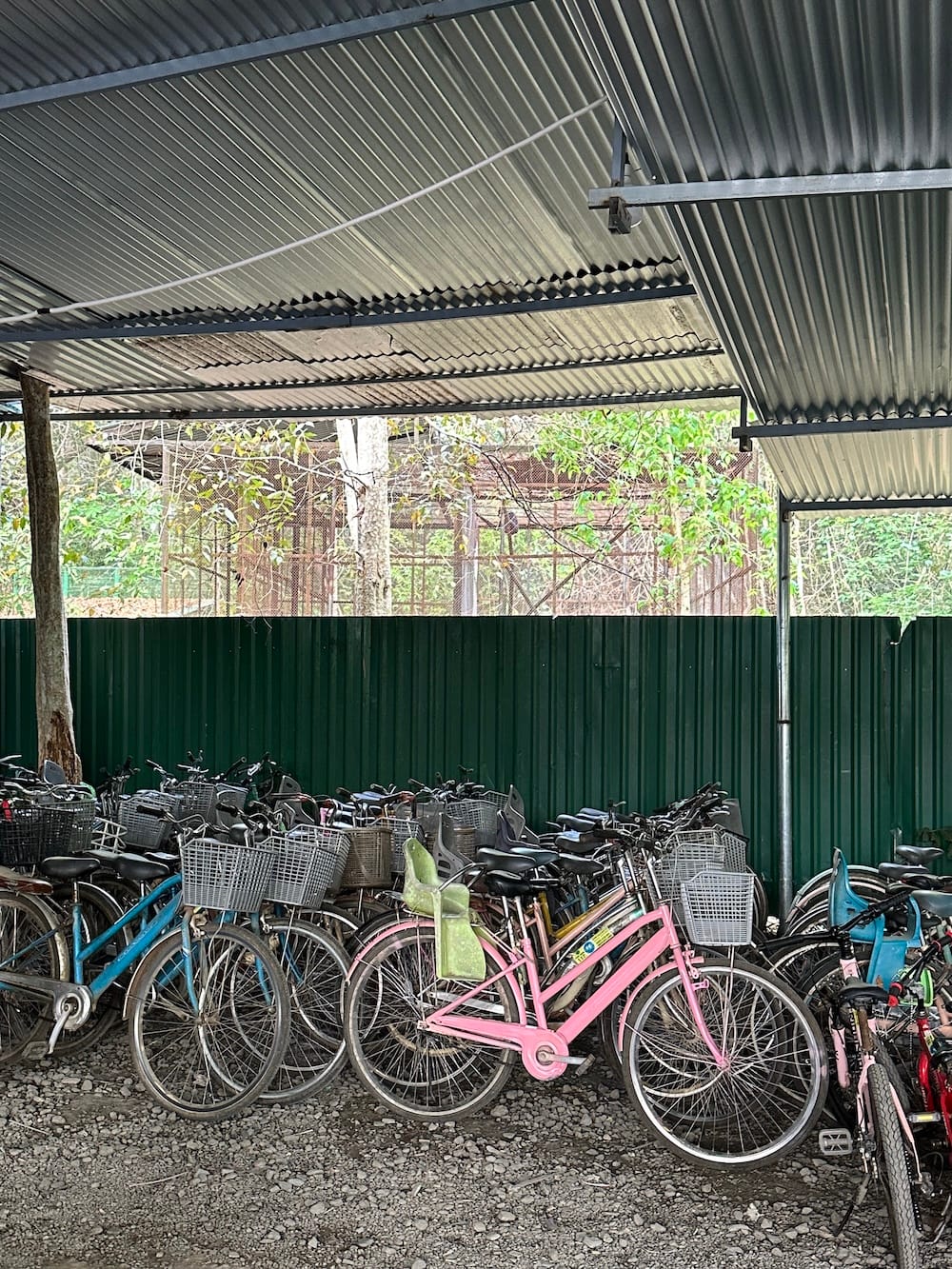
- Cost: 100,000 VND for 4 hours; 150,000 VND for 8 hours (plus 200,000 VND deposit)
- Best times: Early morning and late afternoon to spot birds and deer
- Note: Many bikes are old; you can rent from your homestay and bring it on the boat for a small fee
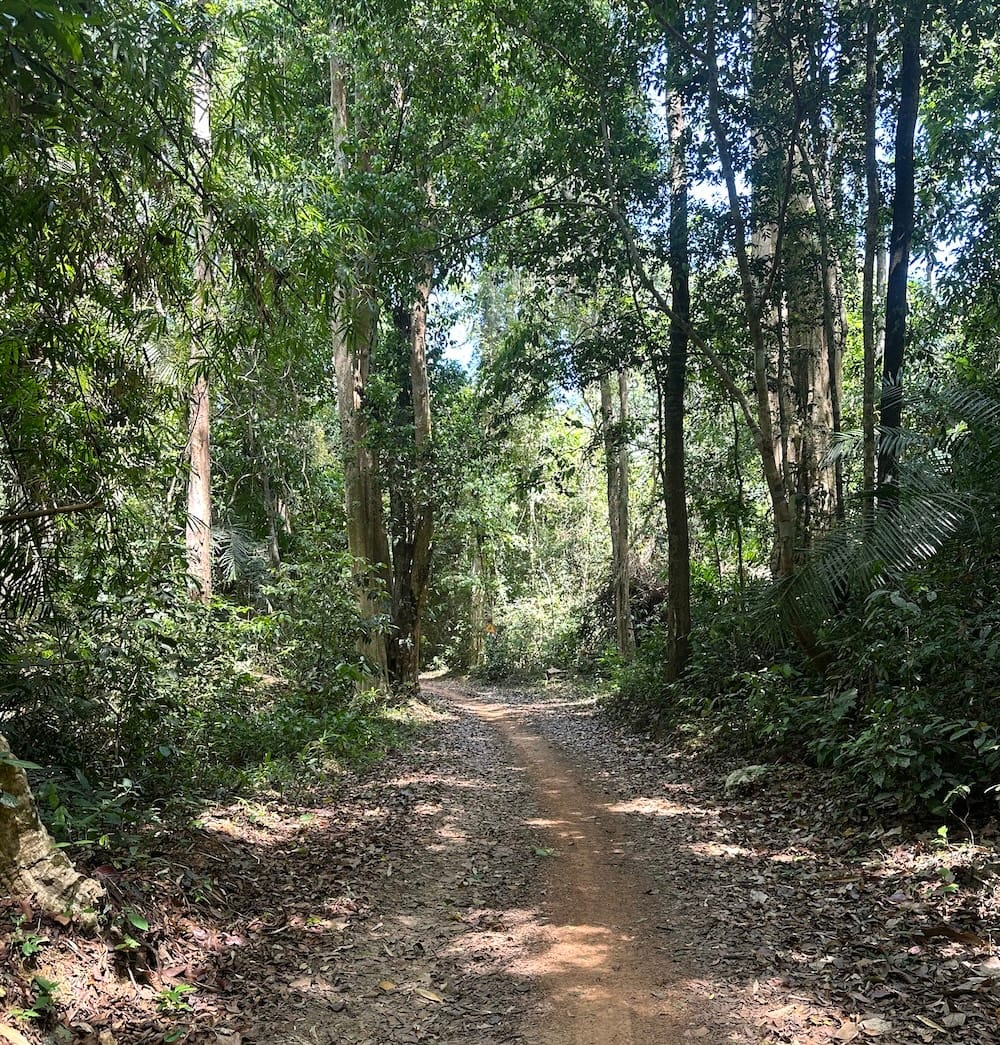
- Road condition: Well-paved and mostly flat toward the grasslands
Early Gibbon Trek
- Timing: Boat departs from the pier 4:45 am, tour ends art ~7:30 am
- What to expect: Best chance to see gibbons and red-shanked langurs
- Booking tip: Book directly with the park visitor center for ~25 USD per adult —hotels often overcharge with a hefty convenience fee.
- Alternative: Experienced wildlife watchers can spot gibbons from the paved road near the visitor center around 7 am
Bau Sau Lake Day Trek
- Route: 9 km by bike/car on a gently ascending paved road, then 5 km on foot (gentle slope) on a jungle trail that is mostly paved with cement and stone. This is just one way.
- Cost: 250,000 VND entry (non-locals)
- Transport option: If you want to take a lorry on the paved road instead of cycling, you can pay 700,000 VND for a private lorry to the trailhead and back if walking isn't your thing
- At the lake: Small restaurant with excellent lunch sets (150,000 VND per person); basic accommodation available
- Wildlife: Along the jungle trail, look up at tall trees for red-shanked langurs. At Bau Sau Lake, watch the shore for crocs and waterbirds
- Lunch: Prebook at the visitor center when you buy tickets. Pay 150k VND to the restaurant at Bau Sau Lake.
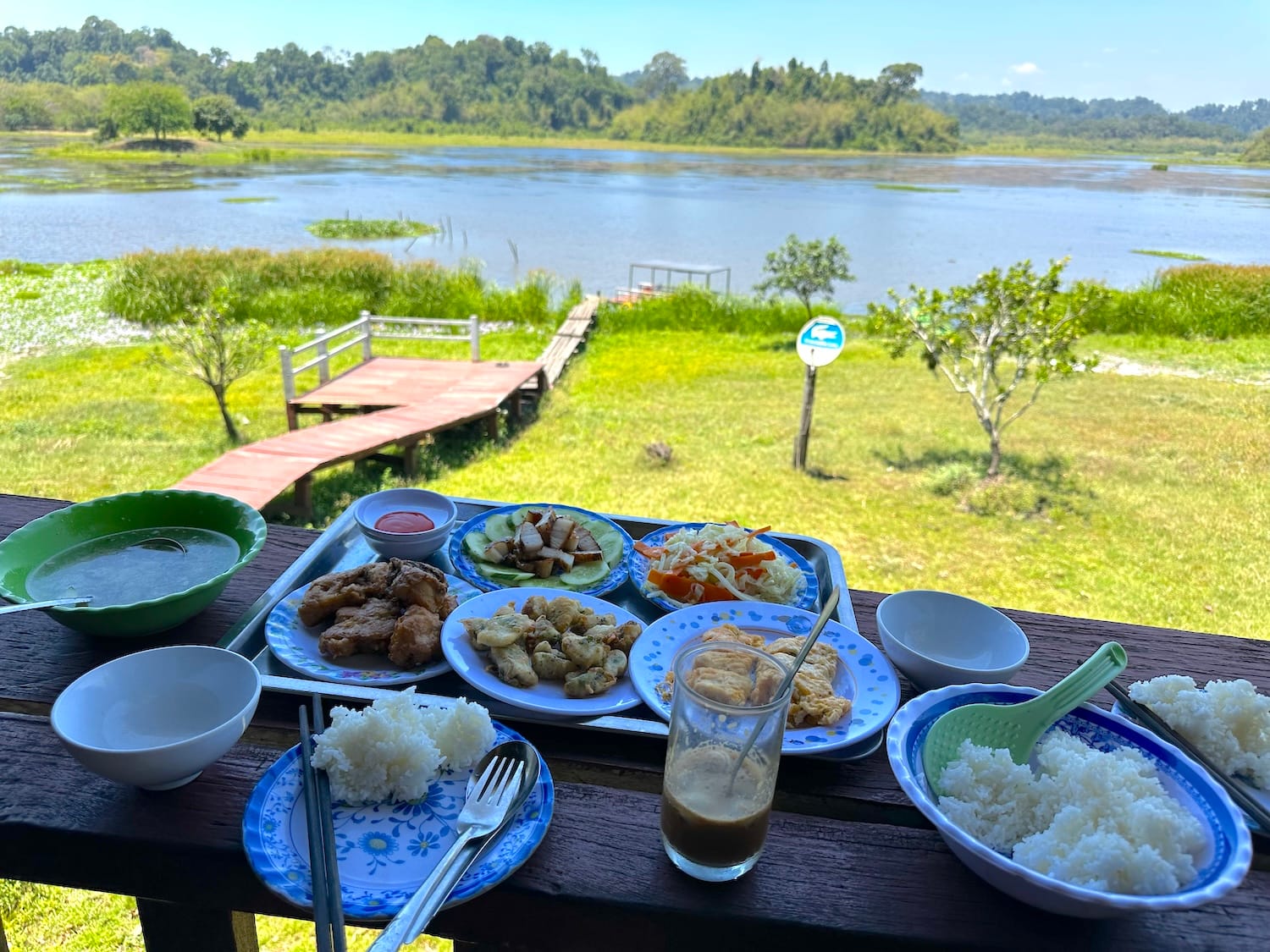
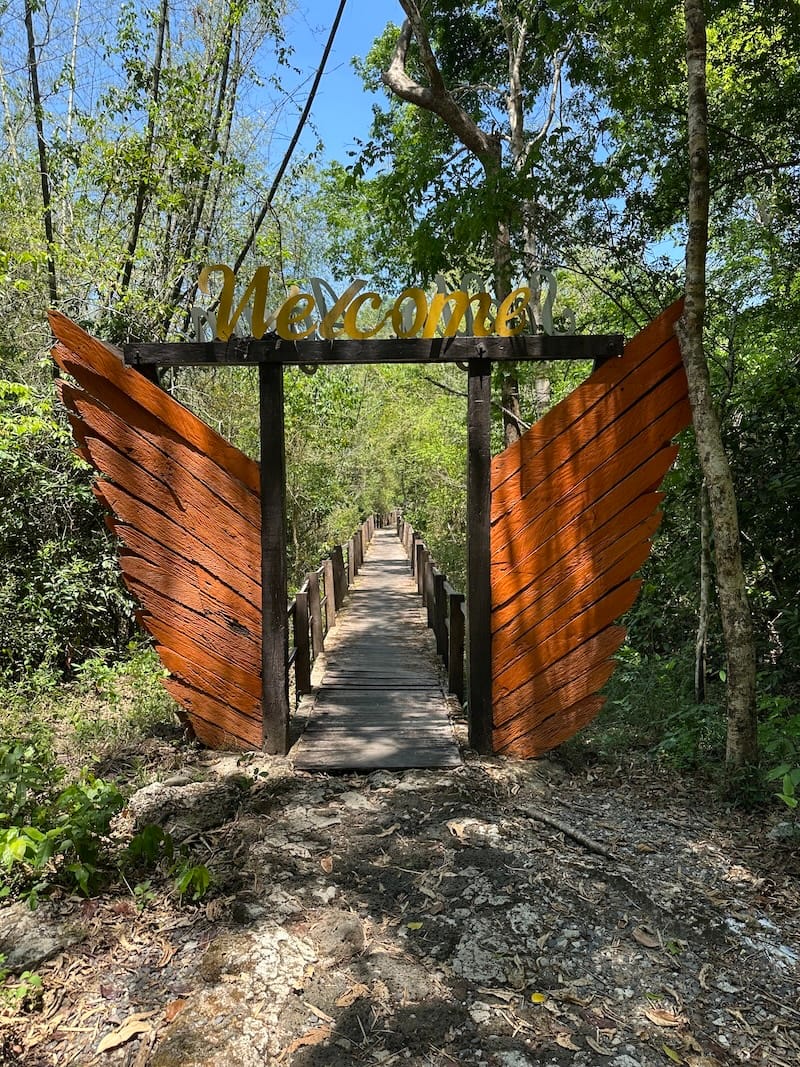
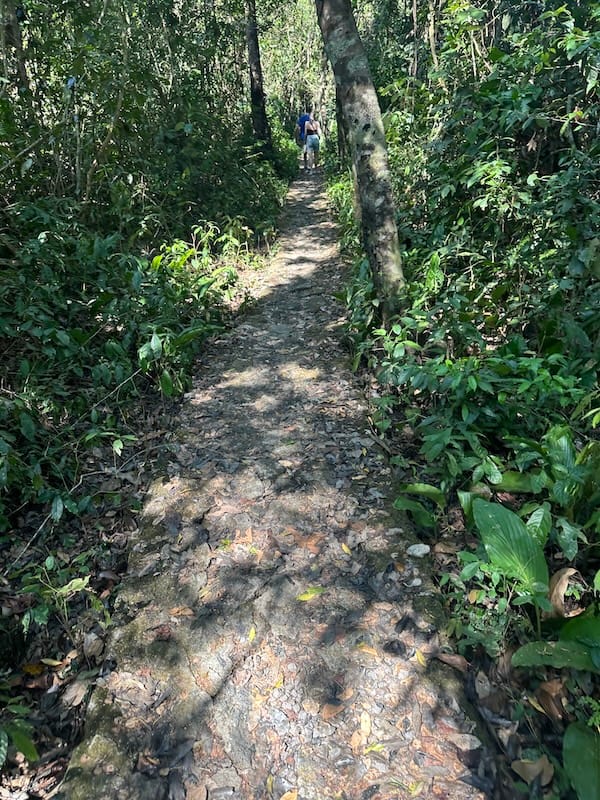
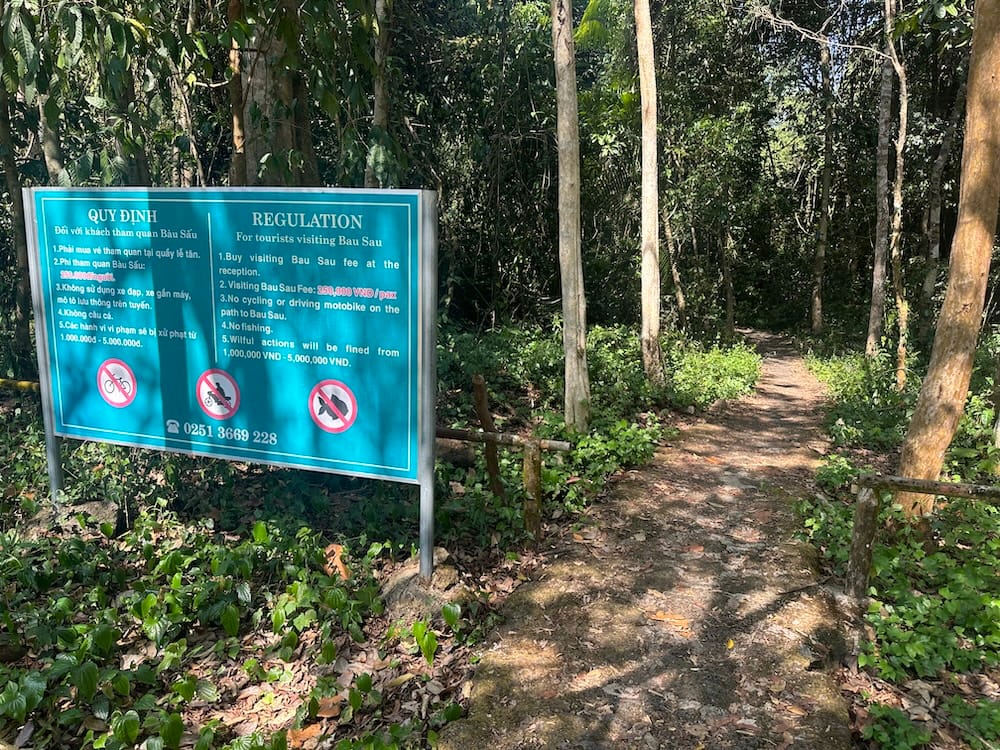
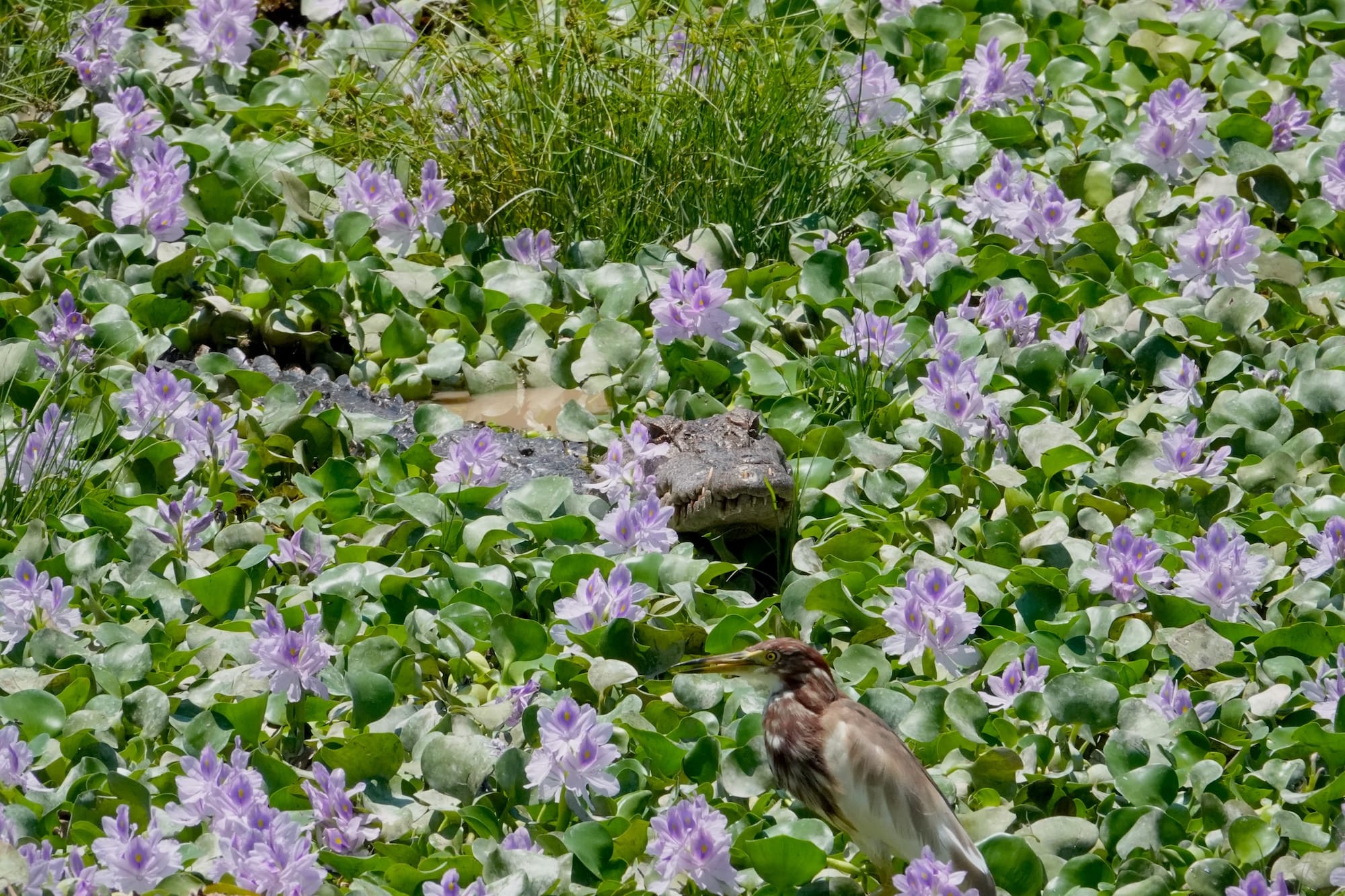
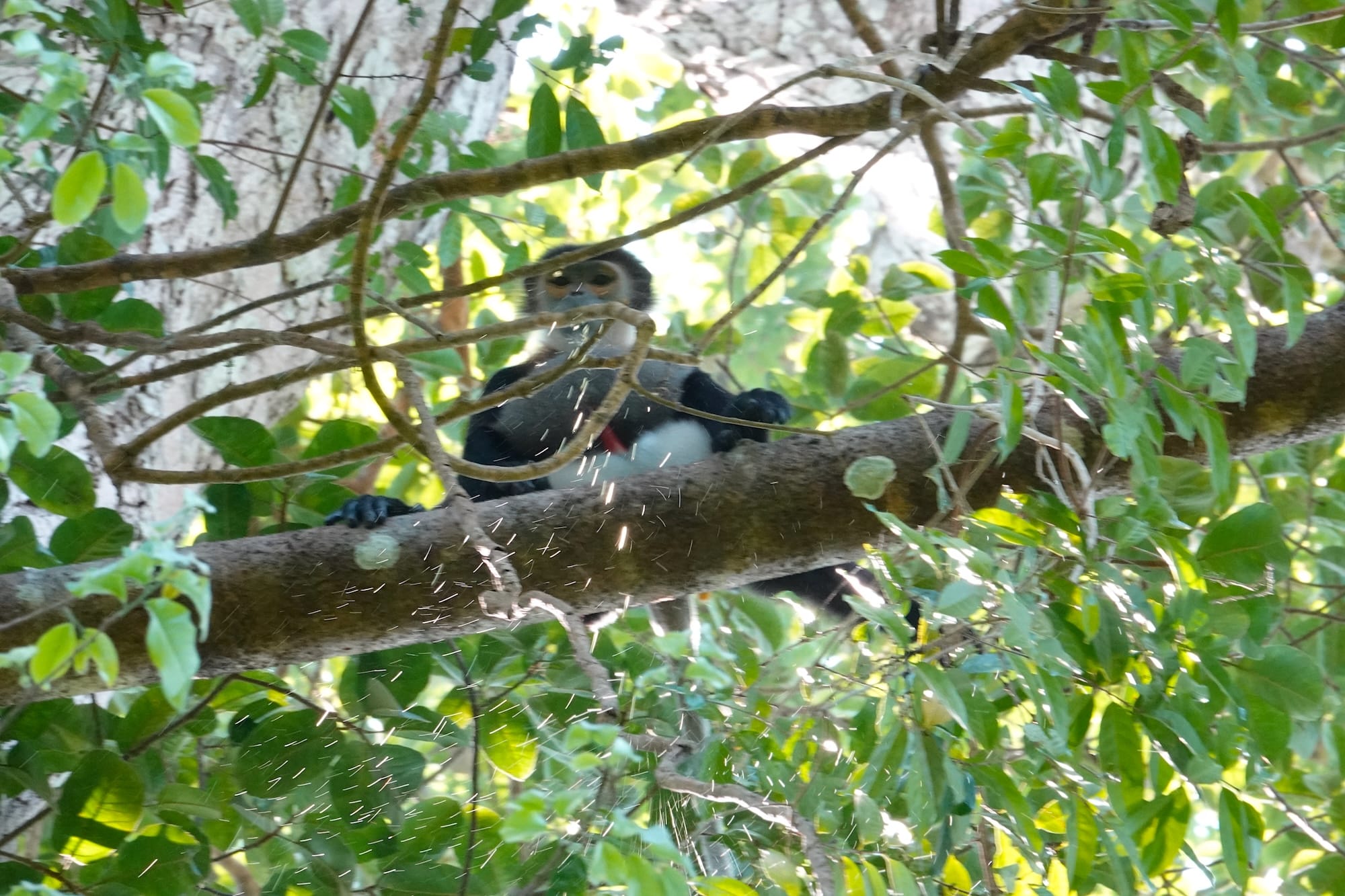
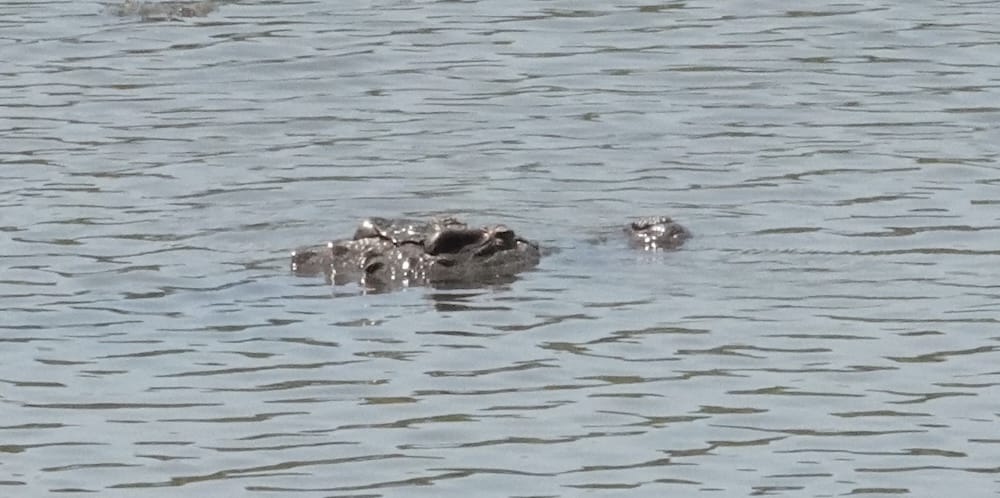
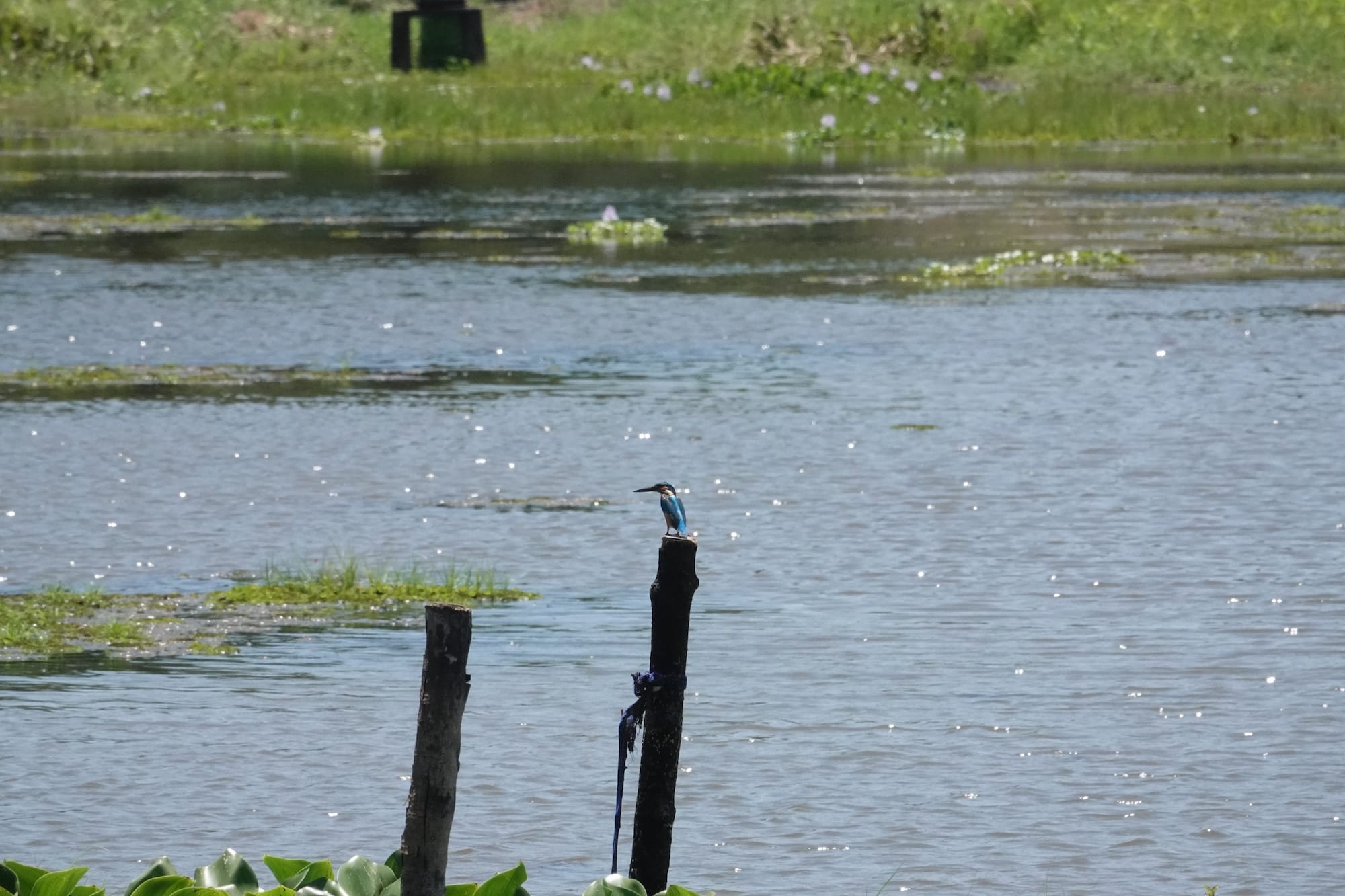
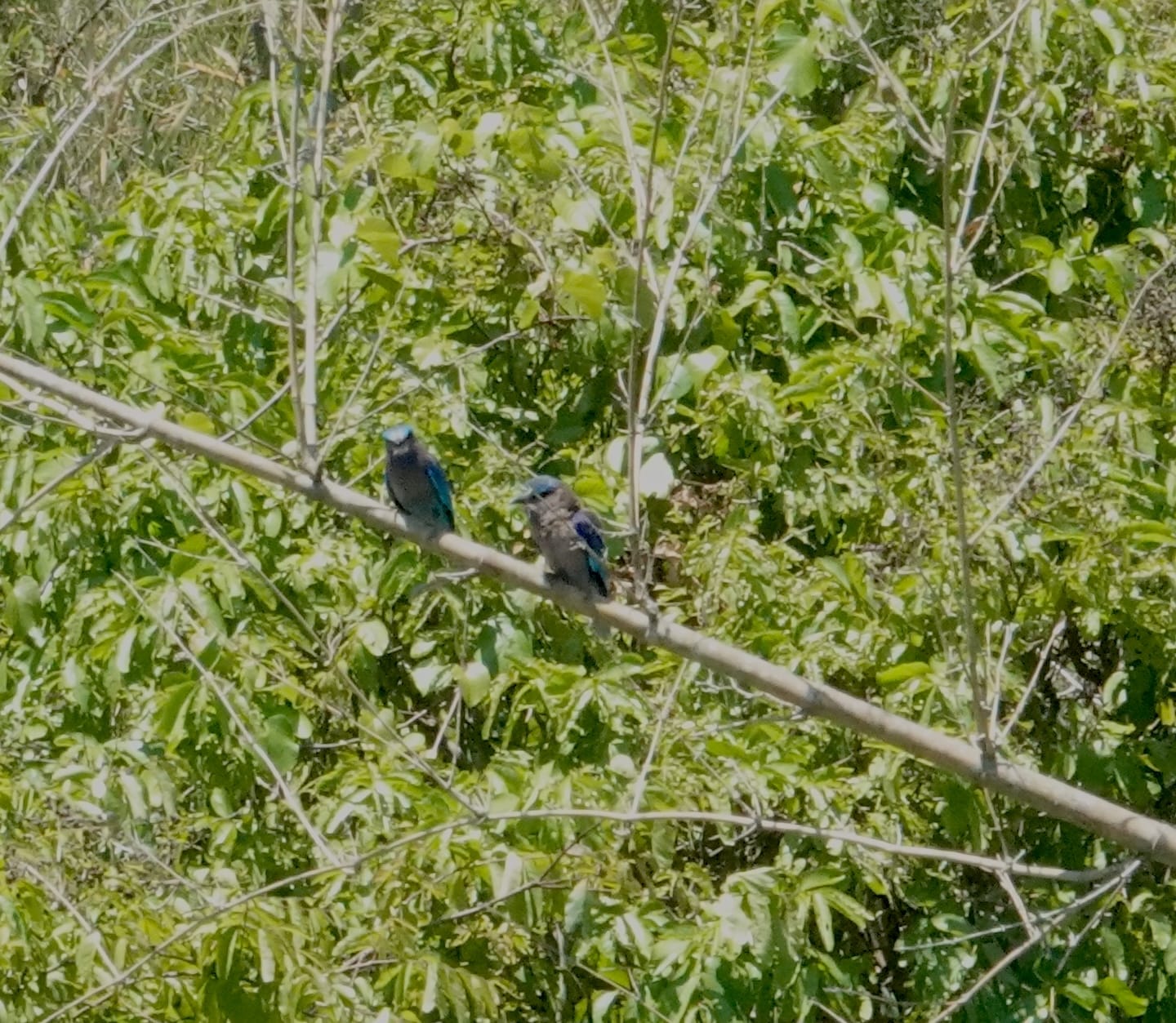
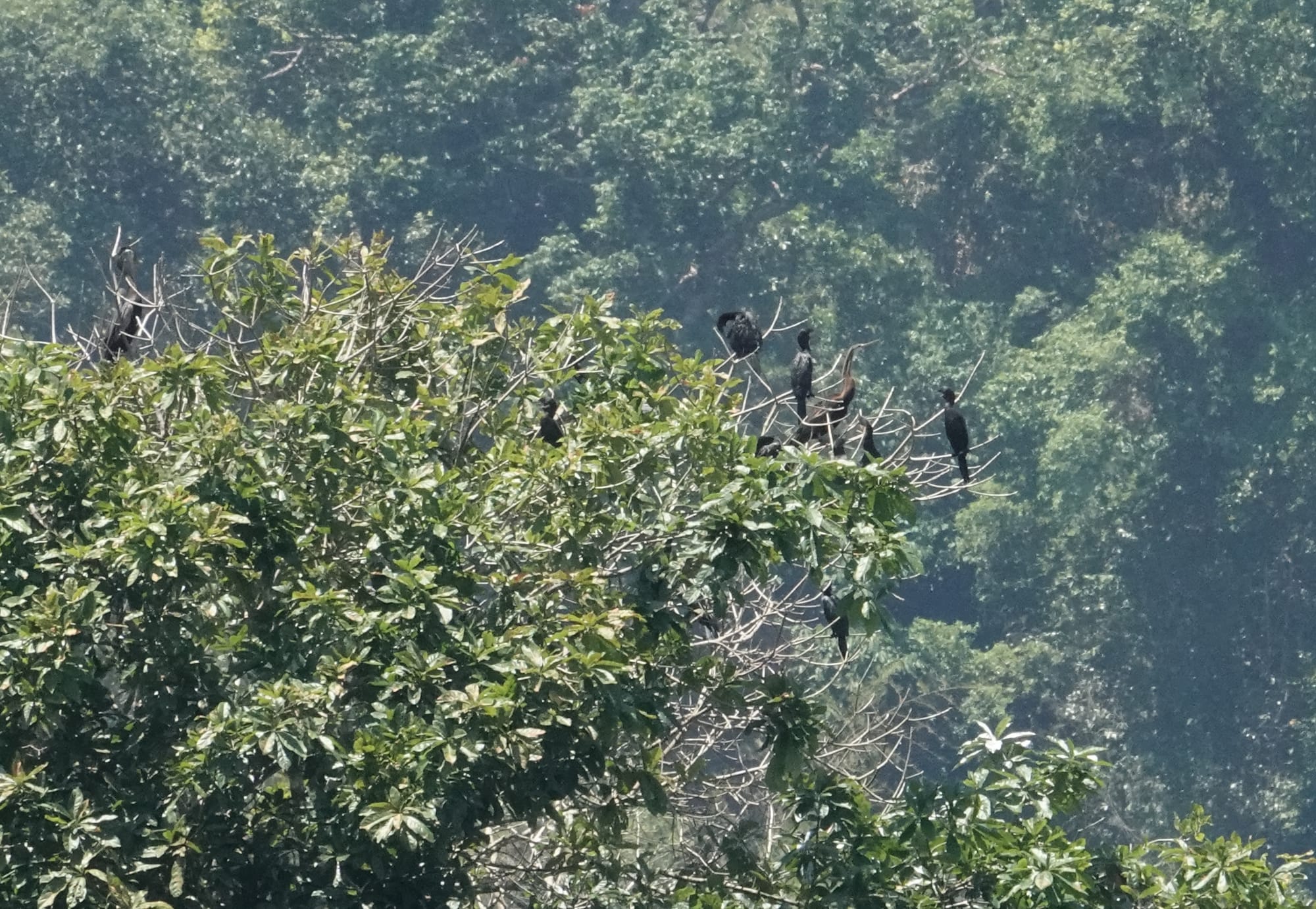
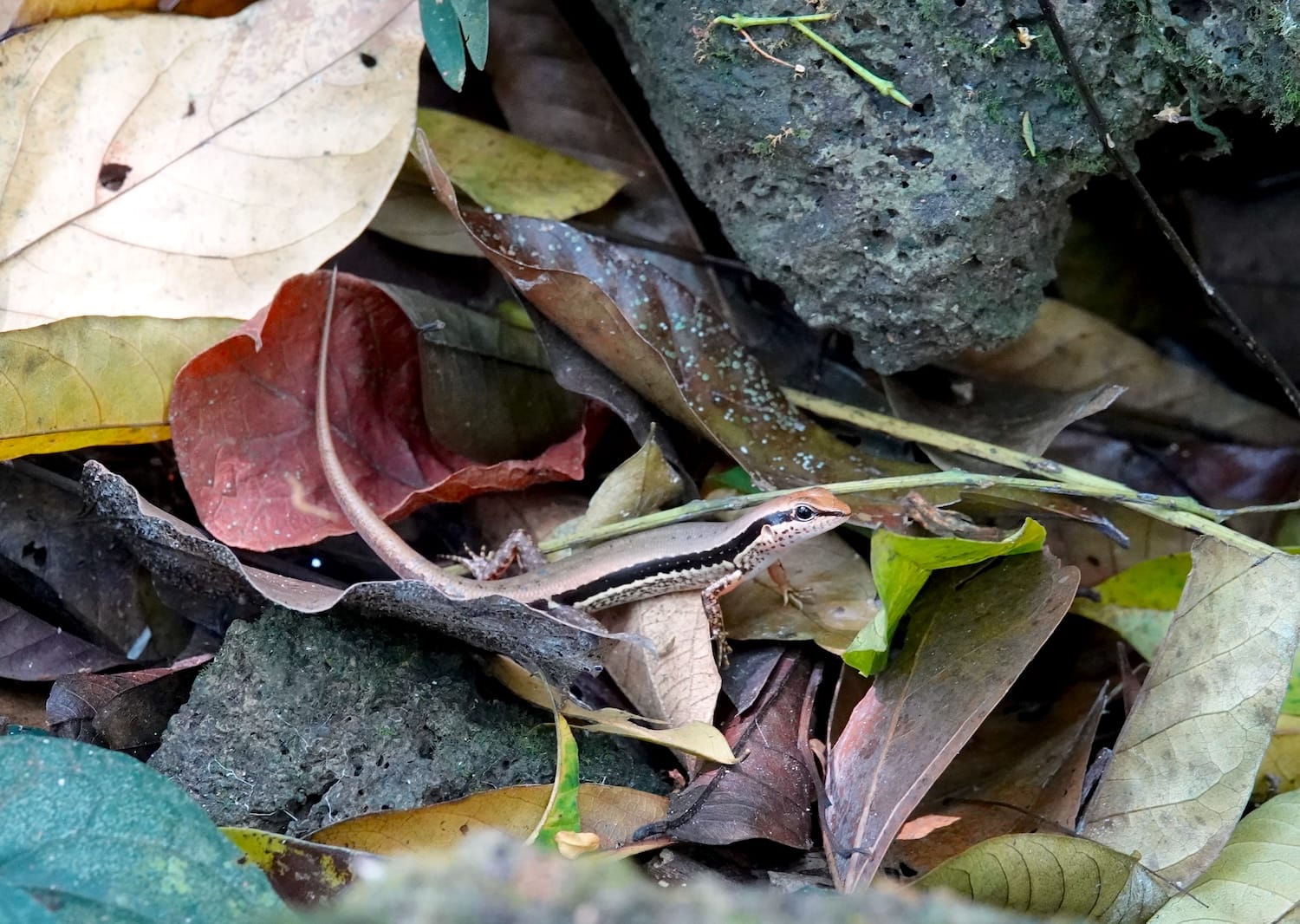
You can choose to stay overnight at the rooms at Bau Sau Lake.
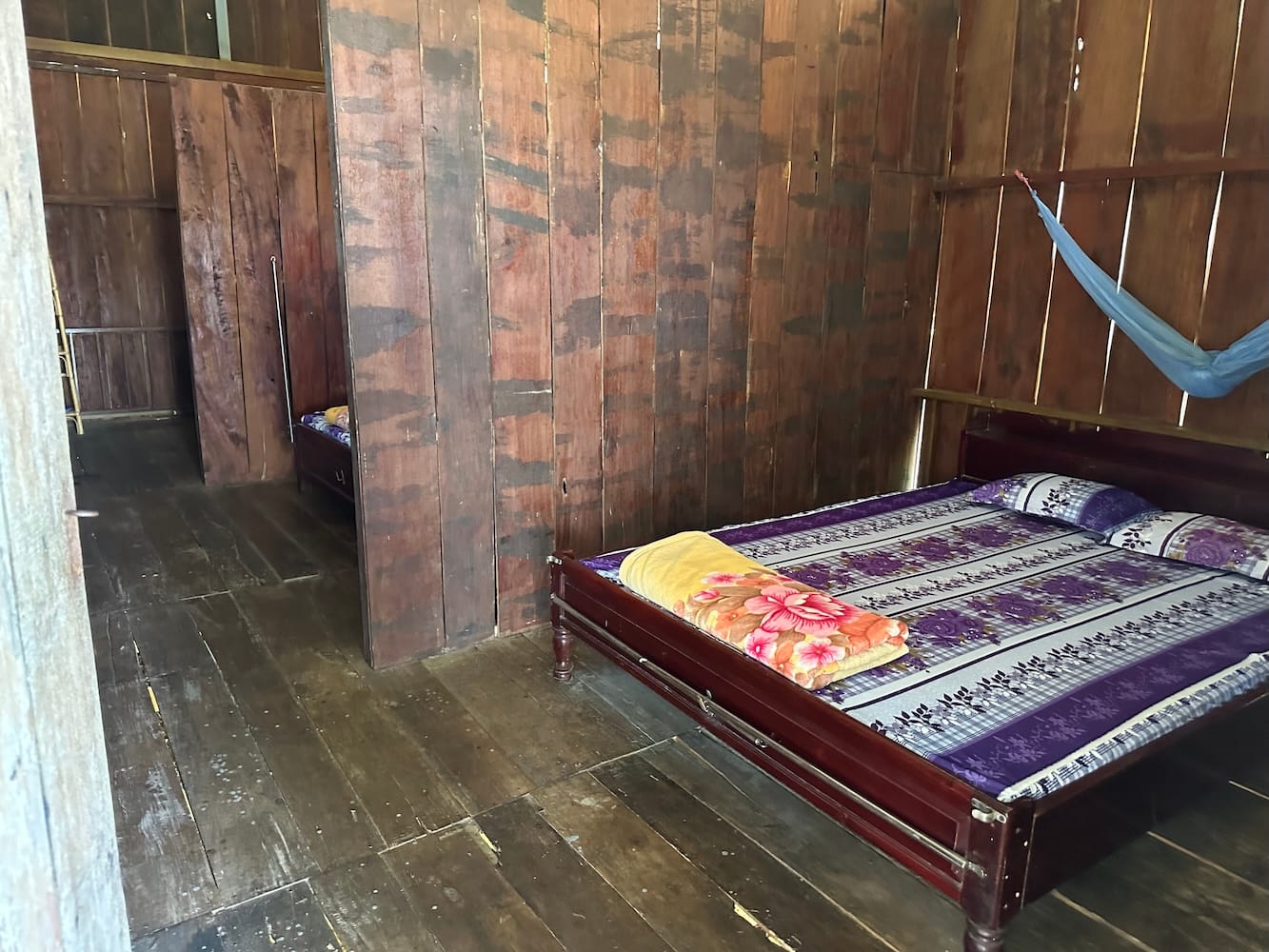
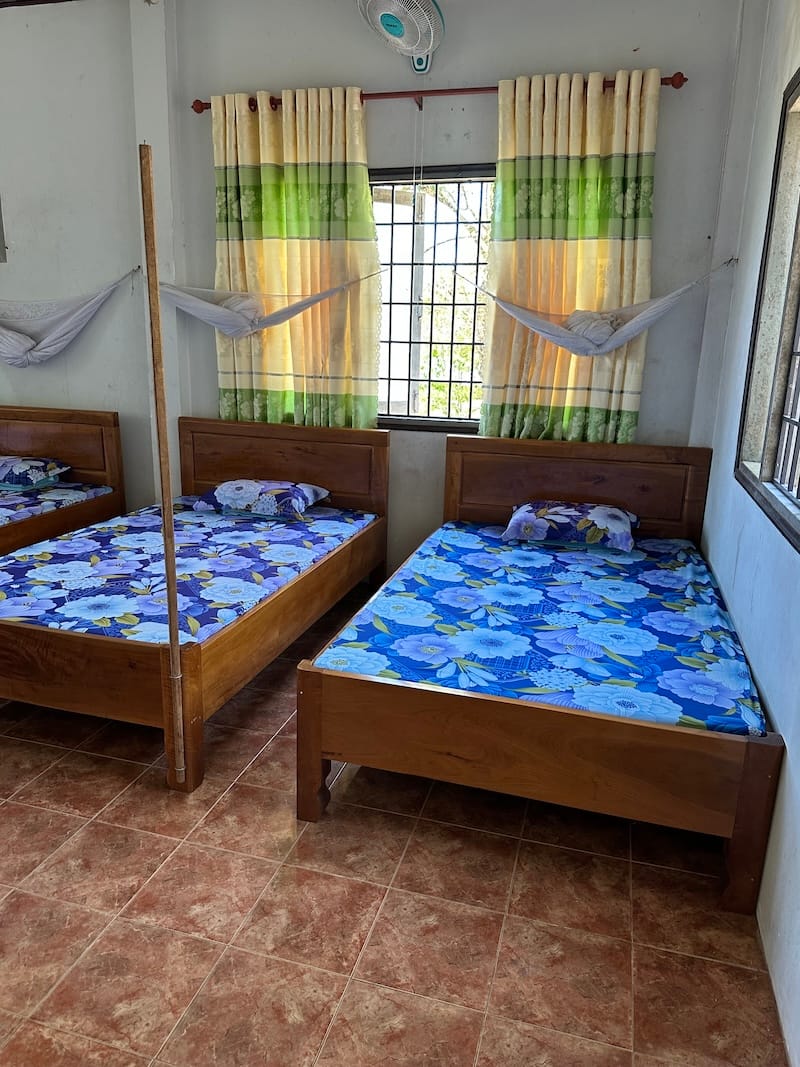
the rooms at Bausau Lake are basic. There are fans in the room. You can book this with the National Park at the visitor center or via email in advance.
Bird hides
- How it works: You pay 500k VND at the boat ticketing office and choose either pheasants or pittas. You go to the hides accessible from the visitor center if you dont have a guide. If u are just one person, the ranger might drive you on his motorbike there. Rangers scatter food and play calls on their MP3 to attract birds
- Honest take: Not essential for birdwatching—you can spot many species without them, even the Siamese Fireback. In this post, I mention how to find the Siamese Fireback pheasants for free and naturally without baiting.
- Best sightings without hides:
- Siamese Fireback pheasant: 7 am or after 5 pm along the Heavenly River road (10 minutes gentle uphill cycle from the bike shop towards the toute to Heavenly Rivers. Continue cycling past the trail head of the botanical gardens and the noodle shop, turn right when theres a sign that says Heavenly rivers. At 7am or after 5pm, there is a 50-50 chance Siamese Firebacks are crossing the path here. Evenings tend to be better as they are slower. We saw a male crossing the path but we were totally unprepared and still on our bikes. Right after turning right from the main path, you do not need to cycle anymore and can leave ur bikes there and continue slowly on foot. There are many birds along the path towards heavenly River.
- Greater Eared Nightjar: After 6:30 pm on the same spot where you can see Siamese firebacks.
- Blue-rumped pittas: First 100 meters of the trail next to the bike shop. We saw them just chilling amongst the trees along the trail near the bike rental shop, clearly waiting for rangers to bring food and music.
- Warning: Bring mosquito repellent or wear long sleeves and pants—leeches are possible too
Looking for langurs and Gibbons
The easiest way is to join the daily Gibbon Trek tour for 25 USD by the National Park that starts at 4.45am. However, it is possible to sight them for free. You have to start at 6.30am (taking the first boat)
Some hotspots to see langurs:
- Rent bicyles from the bike shop, when u exit the bike shop, turn left, and cycle up the road. Look up at the trees along the road. Watch the canopy for branch movements. There are Douc Langurs high up in the morning. continue cycling up the path and looking at the trees for movement. After cycling for about 3km, do a U-Turn. This time we are going to another hotspot. you can go back the same road, and turn left towards the road with the sign towards the heavenly river. Continue cycling past the heavenly river, Disembark and walk along this trail, there can be langurs up the trees.
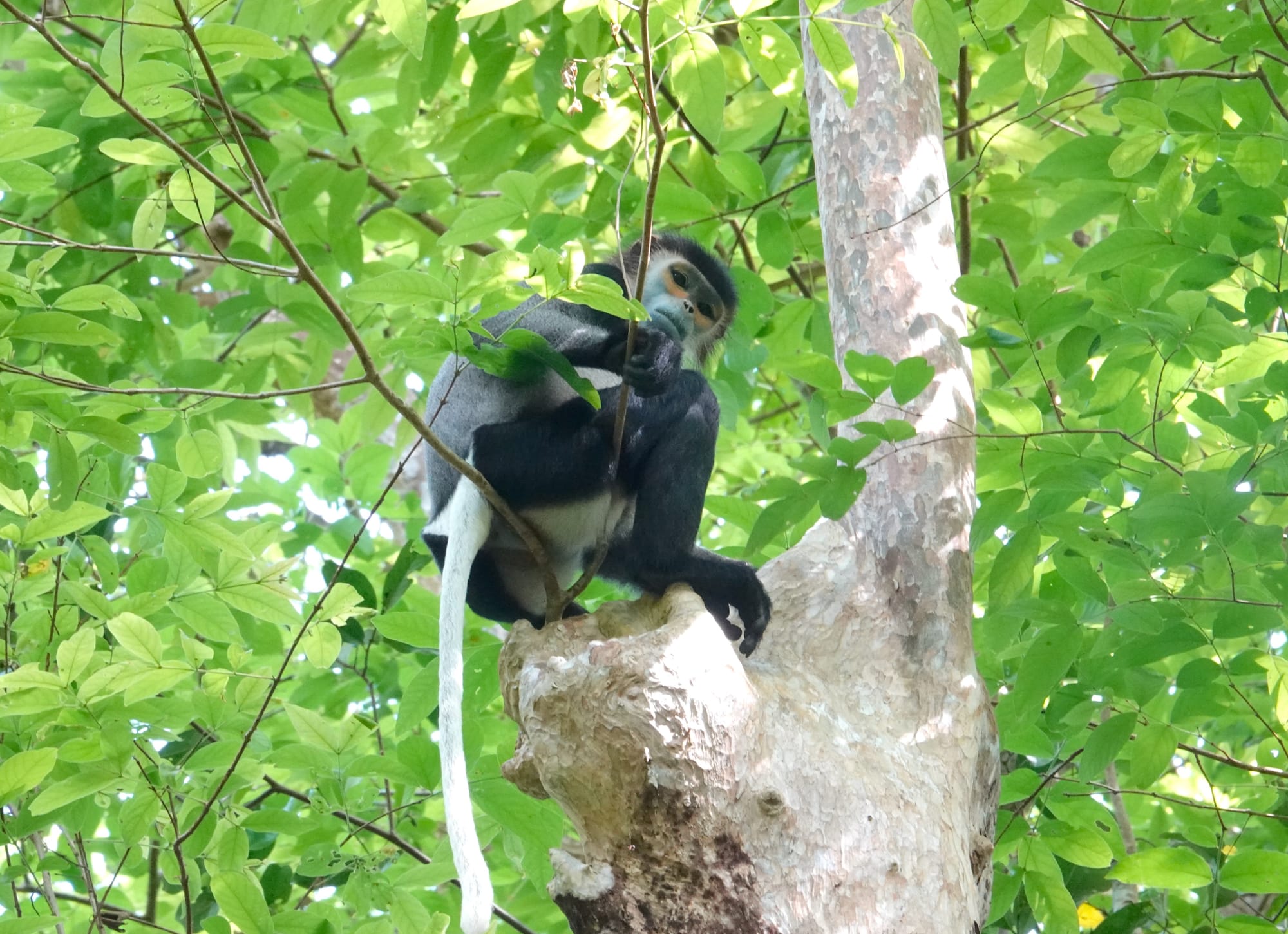
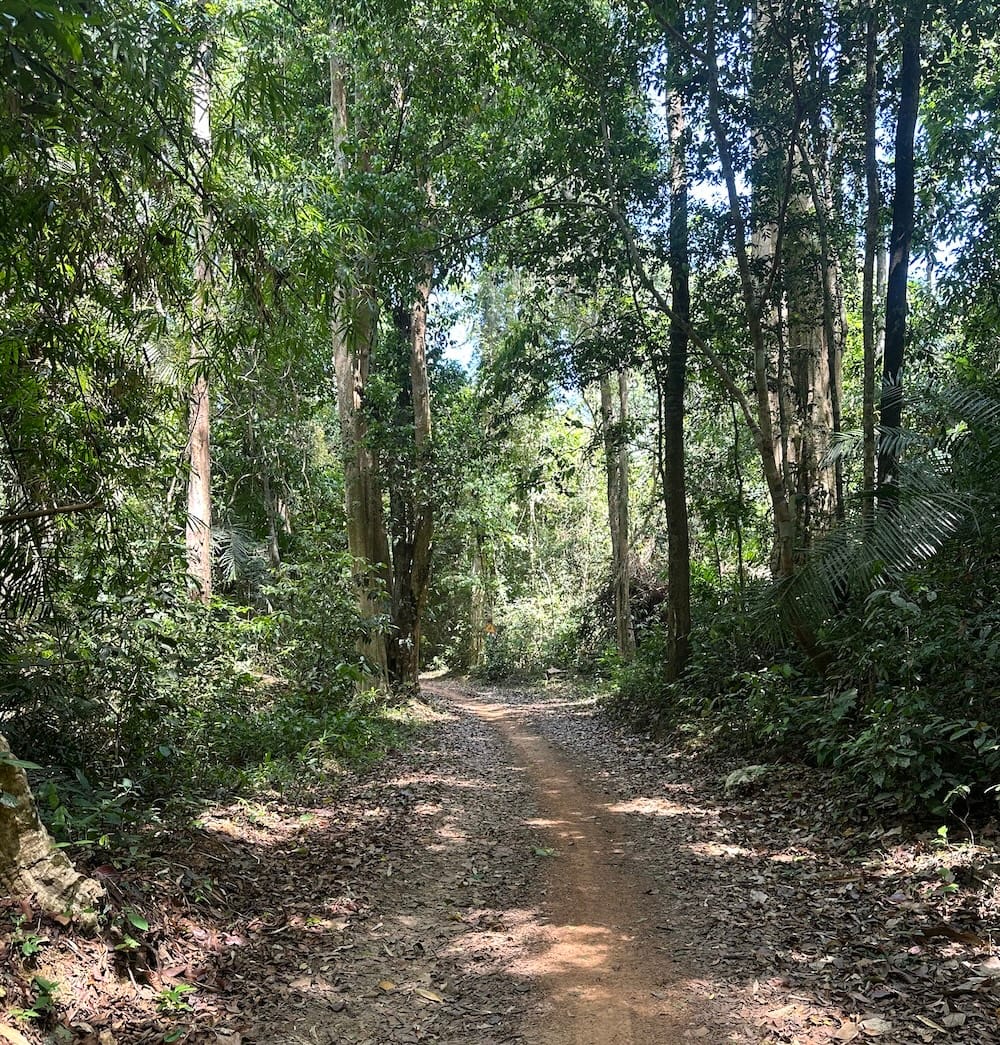
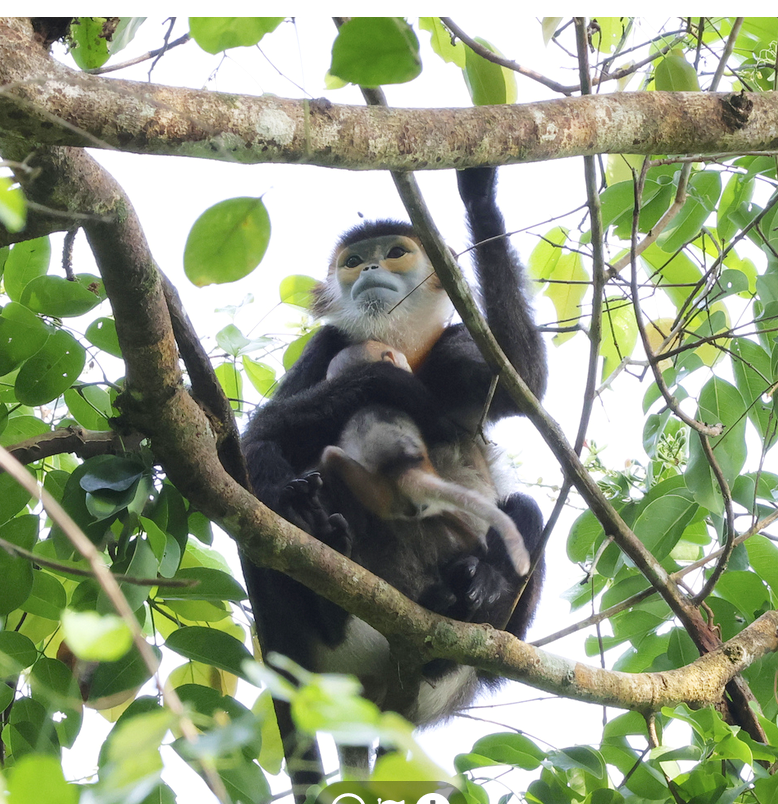
Langurs on the trees after walking past the Heavenly river
Gibbons can be seen near the visitor center or a short 1km walk along the paved road going up towards the trailhead of the Bausau Lake Jungle walk before 7am.
Gaur and Deer Viewing at the Grasslands
- Timing: After 3.30 pm (more likely sightings)
- Route: Cycle 10km toward the grasslands from the visitor center toward the campsite/bear sanctuary. The road is paved and rather flat. There are 3 lookout points along this road.
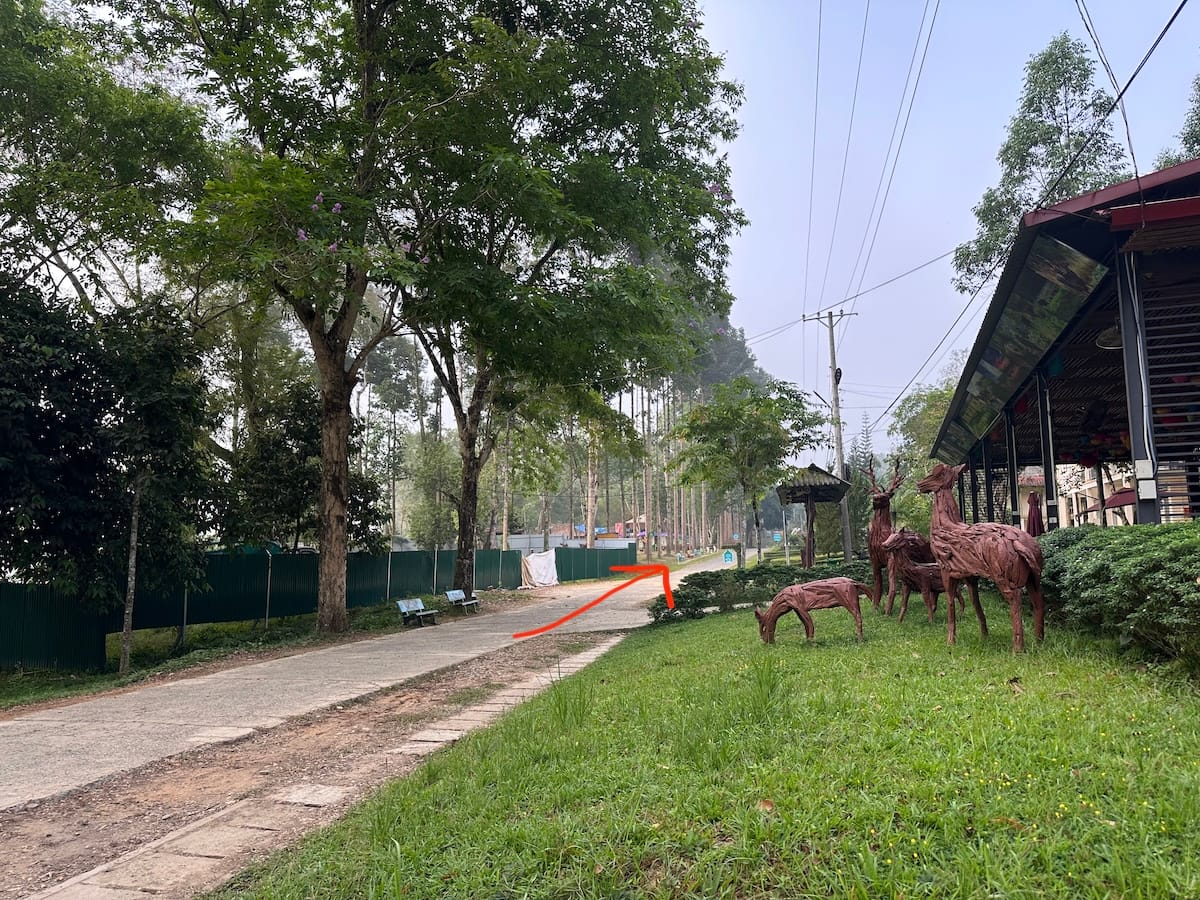
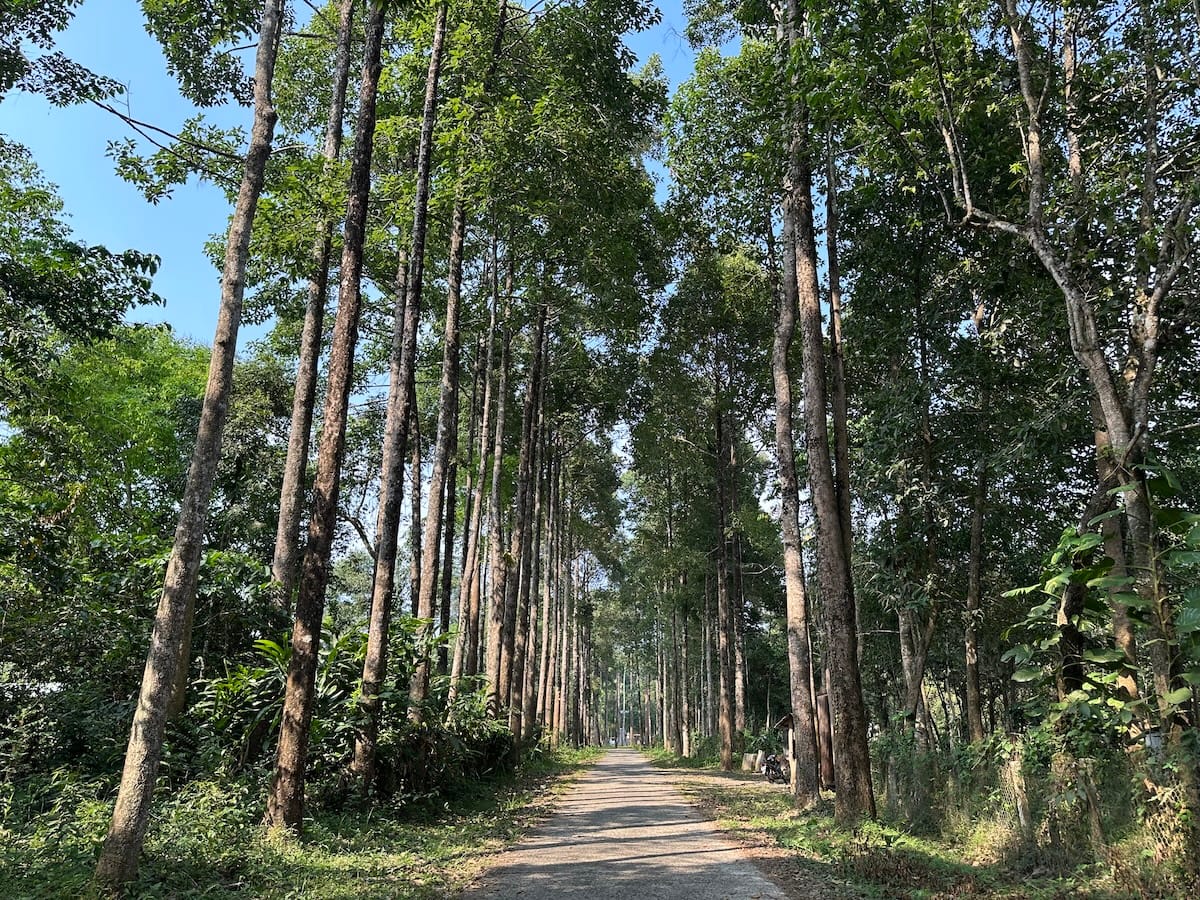
Row of tall trees have tons of drongos, barbets, woodpeckers
The long row of trees about 1km from the visitor center when cycling along this road will have tons of birds. At 6am-7am here, there is a 50-50 chance of sighting the Siamese fireback pheasant crossing this road here as it is near the bird hide.
Continue cycling on past the Bear sanctuary. From the bear sanctuary onwards, there would be paths turning to the right side with vehicle treks or towers. These are spots to go into check the water bodies hidden behind the tall grass for Gaur and deer.
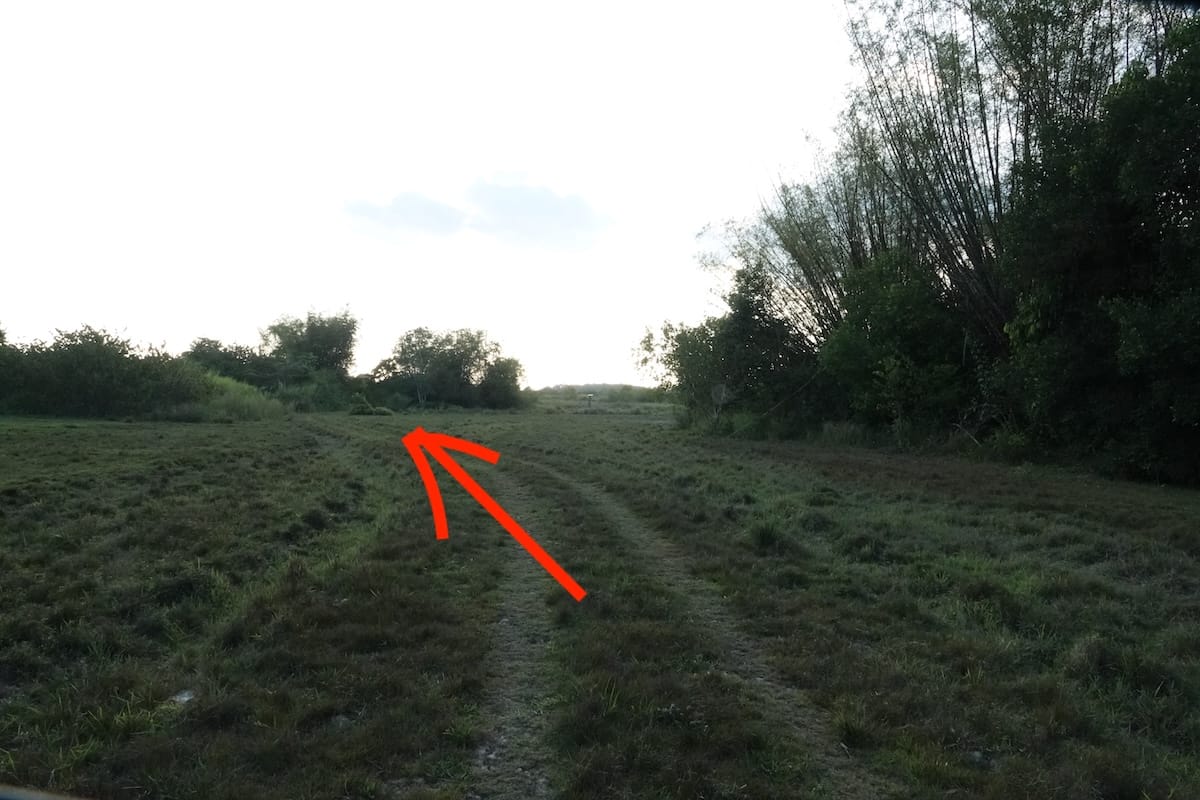
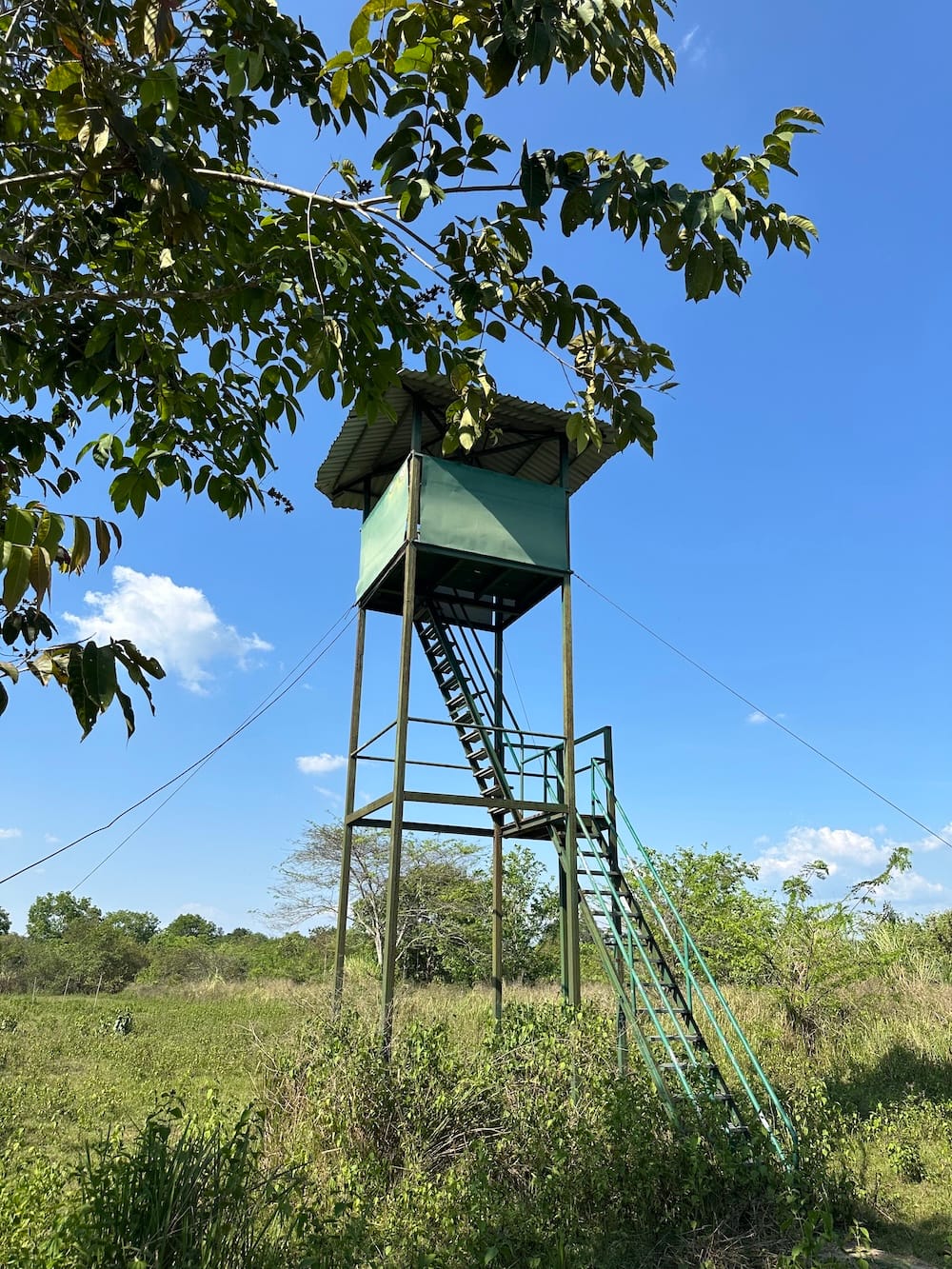
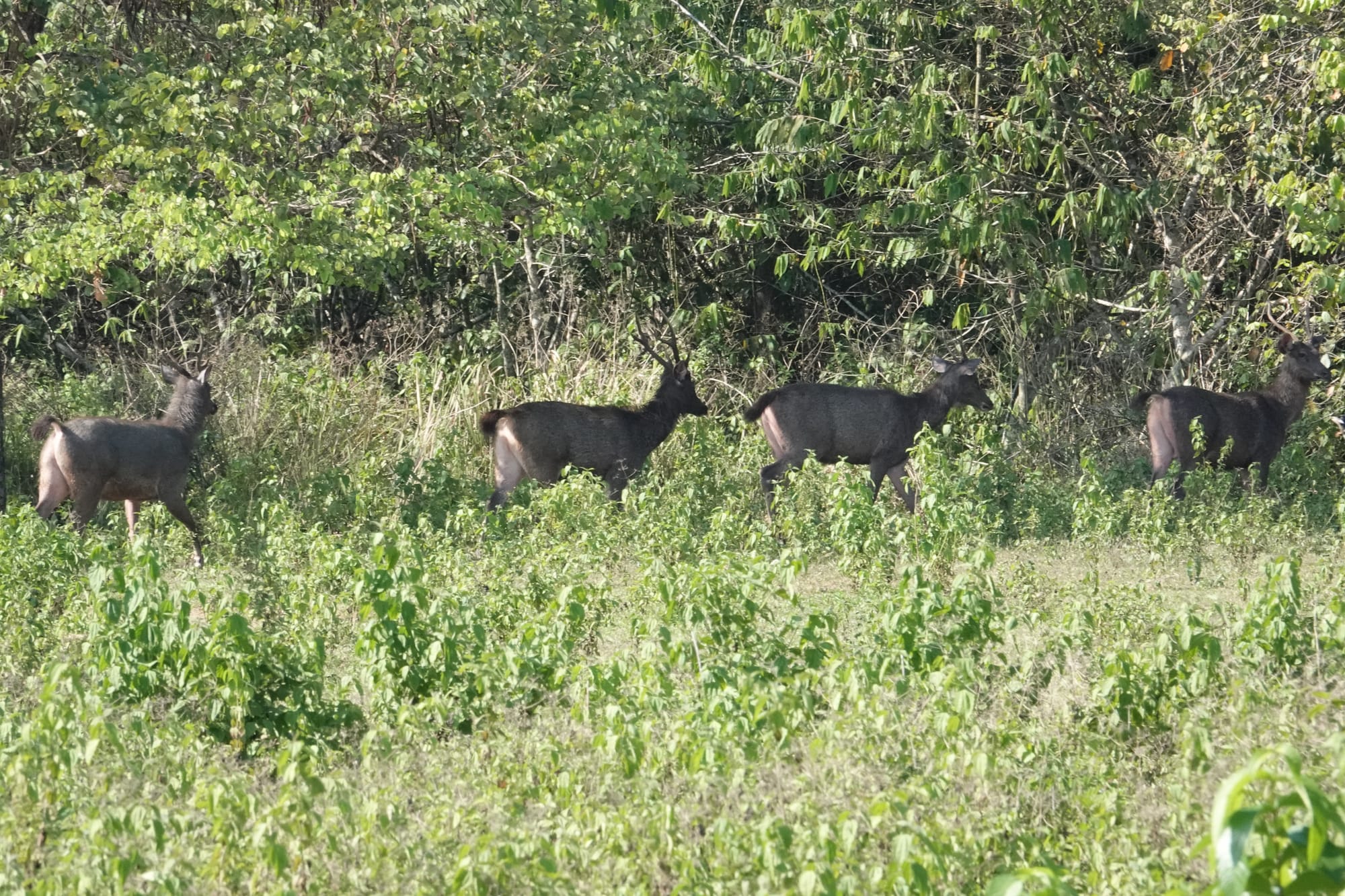
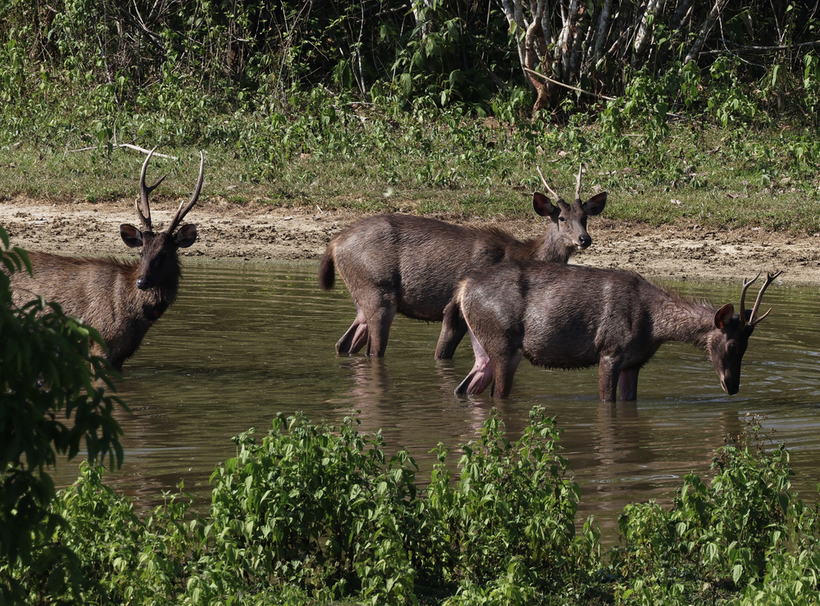
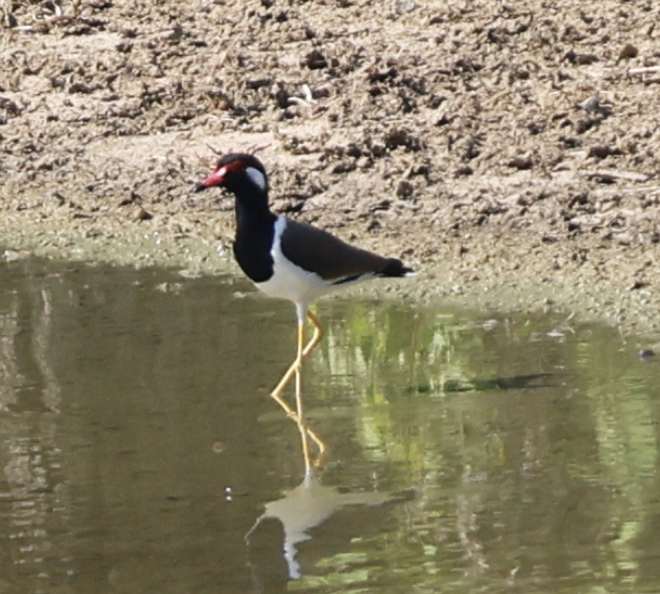
Along the paved road, there would be some openings to go to the right side with vehicle treks. Walking a short distance along these paths would lead to shallow water bodies with cameras pointing at the water. Gaur and deers are known to hang out there. The best spots are the green metal towers on the right.
The best time to watch before 6pm when the road closes for the night safari tour is 3.30pm - 5pm. Please prepare to leave early enough to get back before 6pm. Do note that the metal tower might be unstable and I think not many people should get on it at once. At the water bodies, there are often deers, peacocks, waterfowl and sometimes Gaur. The most common spot for Gaur is at the further green tower. (THere seems to be 2 towers.) DO NOT ATTEMPT TO WALK THROUGH THE TALL GRASS. There are most certainly cobras.
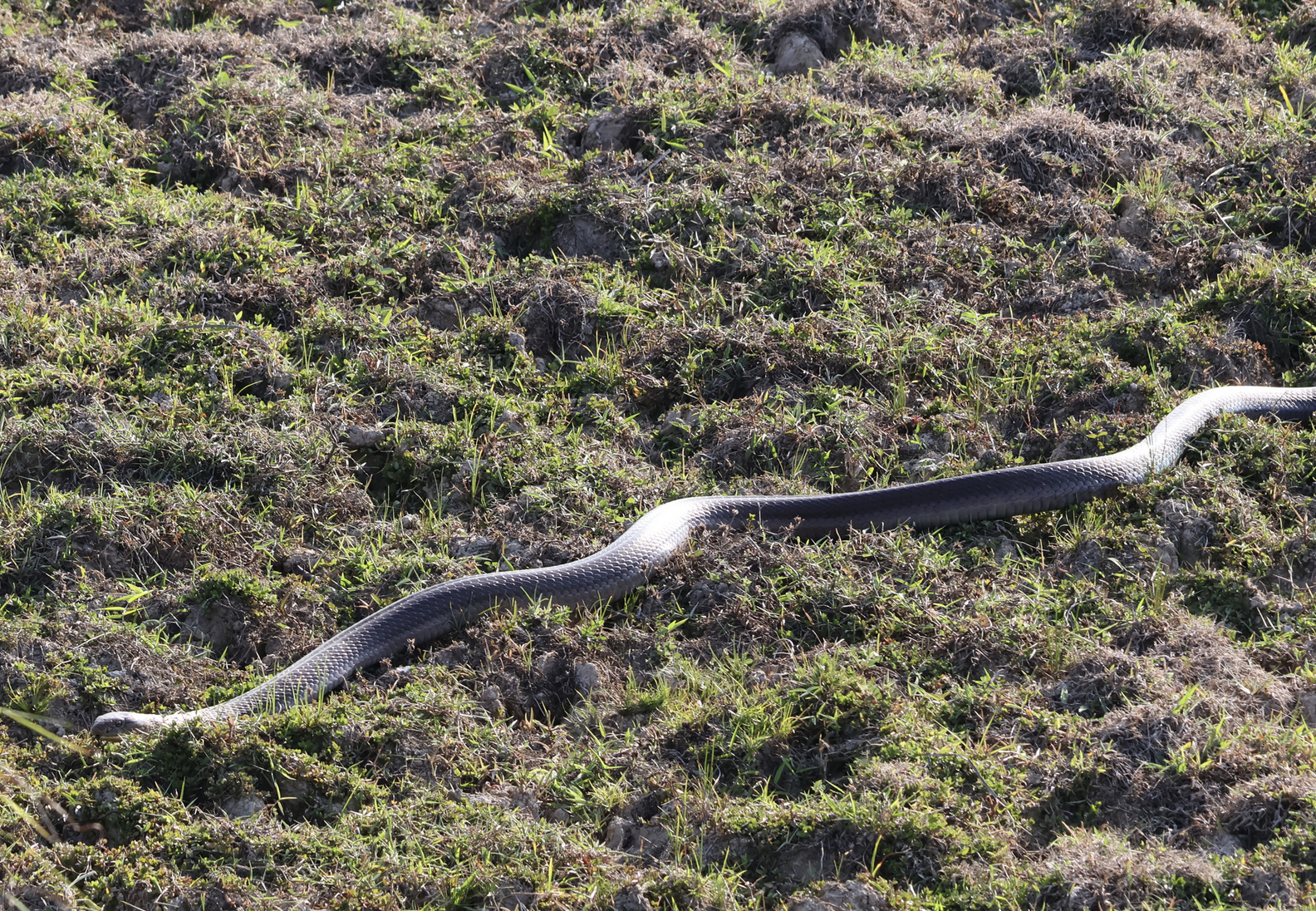
This King Cobra was definitely longer than 3 metres. The venom from a bite can kill you in less than 30 minutes.
Along the way, you will also see a large tree with a swing, This spot is good for birds in the evening: you'll spot emerald doves, green-eared barbets, pink-necked green pigeons, Greater Coucals, Indian Rollers, kingfishers, and hornbills in the vicinity.
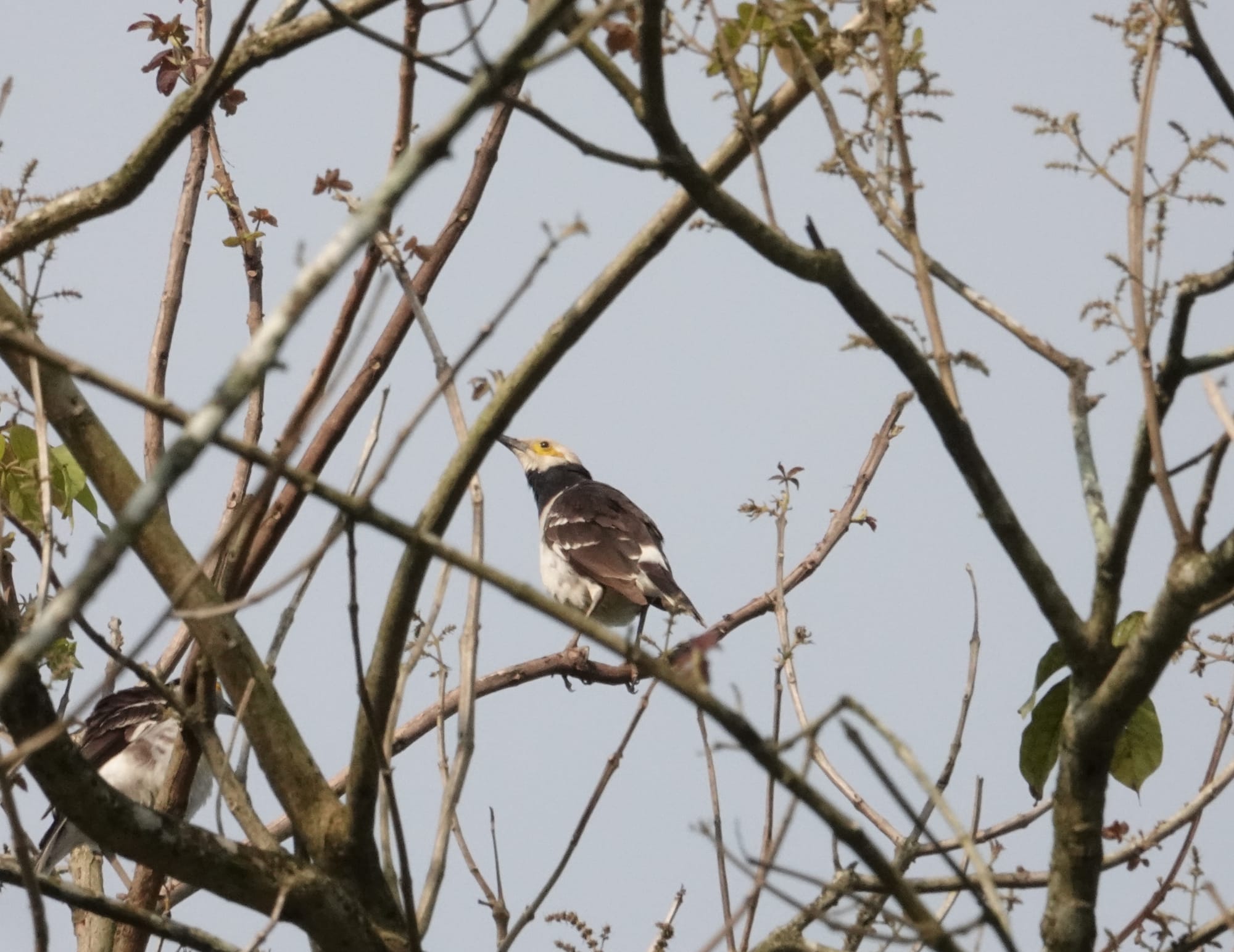
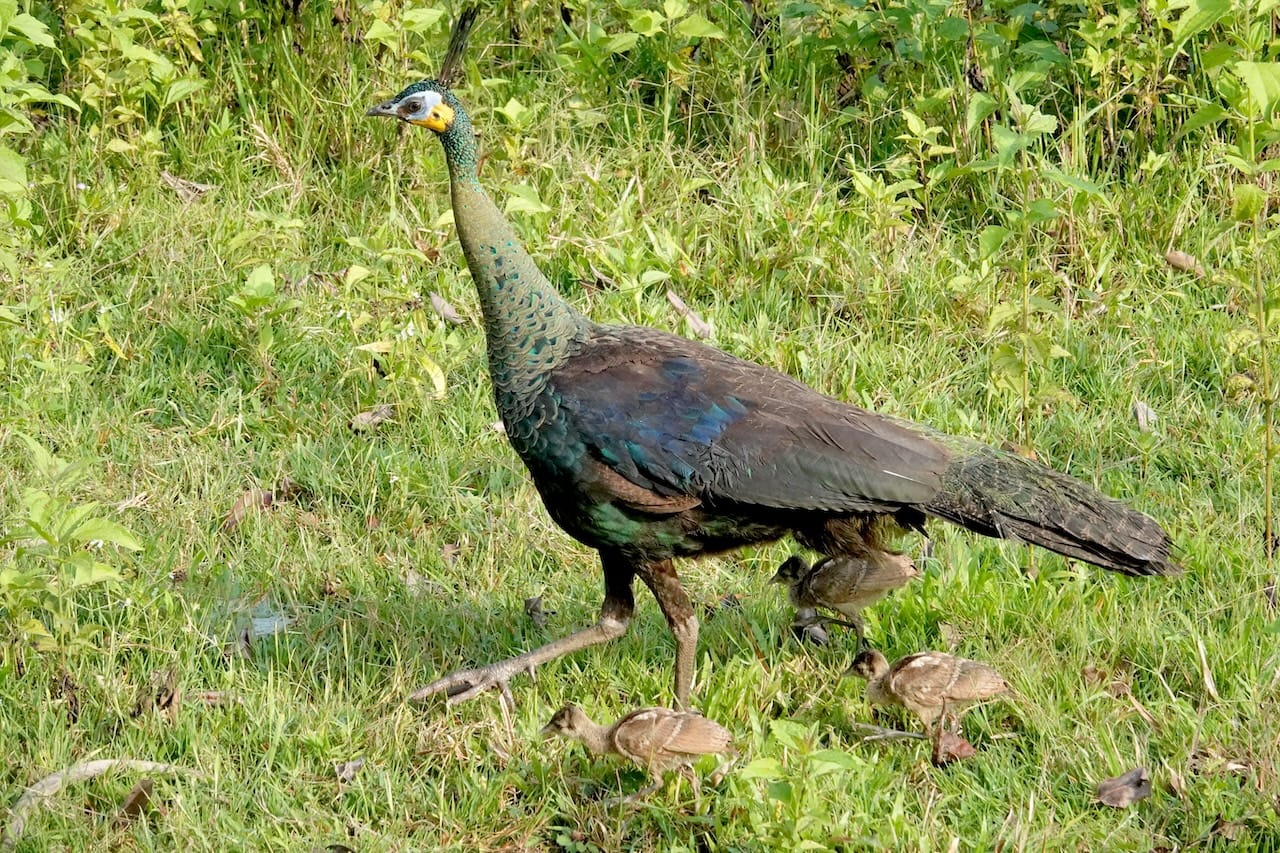
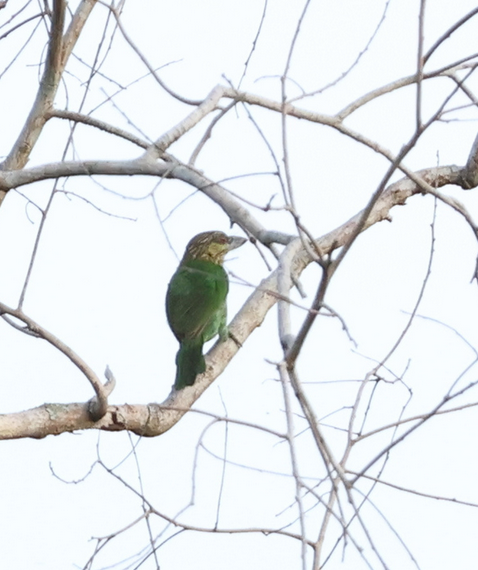
Birds near the tree swing
National Park services for wildlife photographers and families with young children
- When booking tours: Request bird or herpetology specialists from the Cat Tien National Park if interested.
- Jeep option: Lorries with benches are available to get to far away spots if you prefer not walking with camera, but noise from jeep can scare wildlife. Bicycles are actually good enough as the roads are mostly paved.
Critical Tips for visiting
Avoid weekends and Vietnamese holidays if you're serious about seeing wildlife or want peace. Saturday has particularly bad crowds; Sunday is slightly better because locals return to Saigon for work. The noise and foot traffic make spotting wildlife nearly impossible.
Litter problem: Beautiful spots like Heavenly River and Ben Cu Rapids are marred by trash—these areas deserve respect.
Timing matters for wildlife: Be at the right place at the right time. Early morning (around 7 am) and late afternoon are most productive at hotspots.
Final Thoughts
Cat Tien is genuinely special, but it's also fragile. The balance between wildlife conservation and ecotourism feels precarious right now. Recent developments—like plans to upgrade the bridge for vehicles—risk pushing already-stressed wildlife deeper into the jungle. Large events like the marathon that cut through the park draw crowds and noise on a scale the animals aren't used to, which raises uncomfortable questions about how we manage visitor impact. A careful, thoughtful approach to visitor traffic matters enormously. There was a marathon in 2025 that drew thousands to Cat Tien National Park to run a marathon. And then a week later, there was a fatality amongst the rangers - a gaur had gored a park ranger. One cannot help but wonder if the sudden large crowds had frightened the wildlife which reacted defensively and was provoked to attack the poor ranger.
One note on fees: entrance costs for foreign visitors are significantly higher, but hopefully it can be justified if those earnings directly support conservation rather than just tourism infrastructure.
Buy me coffee
Hi, if you like my work and would like to help with my server costs (which I pay for haha), do consider buying me a coffee / kopi / kofi