Washi No Yado
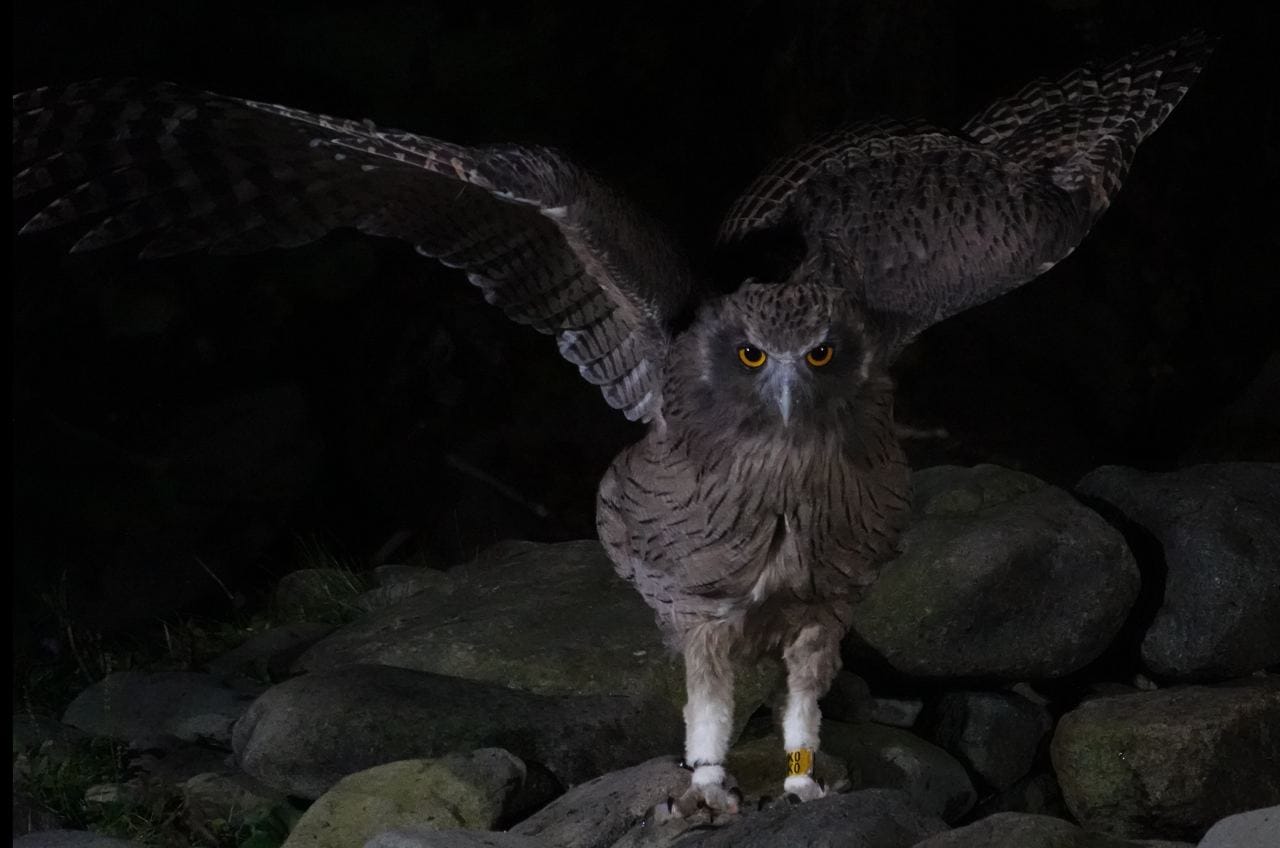
The Blakiston Fish owl, despite being the biggest owl, is hard to see in the wild because it is critically endangered. But this inn in Hokkaido makes it easy for one to watch them up close with a high success rate. The inn maintains hidden fish pond in the middle of a clean flowing river. The survival of the Blakiston Fish owl species is heavily dependent on such conservation efforts because of habitat loss. Feeding wildlife in most cases is problematic, but in some circumstances sometimes practical and controlled short term stop-gap measures are required to help the species bounce back from extinction. There are very few Blakiston's Fish Owls left in the wild. The food source that they feed is being disrupted and also the large trees required for their nesting (they are a big bird) are also being lost to deforestation and environmental degradation. Wild fish occur quite sparsely in the breeding grounds of the Blakiston's Fish Owls and therefore they can hardly produce offspring without artificial feeding. Hence, short term measures to stop the rapid decline like artificial feeding ponds and nest boxes are being implemented to help the birds improve their survival rate.
Washi No Yado is probably the easiest way for the public to observe the owls. You can observe the owls at night from the observation cabins provided and also the bedrooms. There are also rules that visitors must follow when photographing and observing the owl to not ruin the experience for others and also to prevent harm to the owls. You can read the rules here on the inn's website. (You may use a translation browser plugin to translate the Japanese page to English.) One has to be very silent while waiting for the owl and you cannot leave the cabin or car when the owl is at the river.
The visitors of this place tend to be wildlife photographers, not the casual tourist. It is essential to follow the Inns rules to protect the owls from harm and also not ruin other guests' experiences. During some season, the owl might only come after midnight. Hence, I strongly do not recommend this for young children or people who are not willing to wait for hours for wildlife to show up. It is normal for wildlife enthusiasts to wait hours for wildlife to appear and this is not for most people. The owls are ultimately wild and wildlife enthusiast should already accept that wildlife sightings are never guaranteed and often require waiting.
Reservations
You can check http://fishowl-observatory.org/reserve.html (their website) for the prices, but like many Japanese websites, the information is outdated. The price for 2026 is 10,000 yen per person (for 1 night stay). The lodge price listed is per person, not per room, this is clearly stated in the website which is in Japanese. Even if 2 people share a room, the total cost will be for 2 people and 2 seats are reserved in the main observation cabin for the 2 people. They are selling the limited space in the observation cabin and my guess is that this method of pricing is simpler for them. Also, meals are no longer served in 2026.
Payment is in cash or card upon arrival. My card did not work with the inn's card machine, so I paid in cash. I would recommend bringing cash to pay.
Reservations at Washi No Yado are by phone only and the staff only speaks Japanese. If you do not speak Japanese, you can ask help from a someone who speaks Japanese (for example, a friend) or pay a small fee to someone on Fiverr who helps non-speaking tourists make reservations in Japan to make a phone call for reservation. Fiverr does have people helping tourists to make phone calls in Japanese for reservations for a small fee as there are many old inns in Japan that only accepts reservations by phone call and the staff only can speak Japanese. It is around 10-20 USD per request on Fiverr). Reservations by phone call does not have a confirmation email, but that was not an issue at all in my experience.
I was told that it was also possible to make a reservation at Washi No Yado using English via email by emailing the Rausu Tourist Association who would help you make the reservation at the inn. Do note that the price and information about Washi No Yado on the Rausu Tourist Association website is outdated, the price is wrong and the inn no longer serve meals. I was told that booking a stay Washi No Yado via Rausu Tourist Association would probably be little bit higher than booking directly through the inn but you can treat it as a small booking fee.
Tons of non-Japanese speaking guests visit the inn for the owl and google translate works well. The owner and staff are very friendly and helpful.
You can also visit the observing cabin without an overnight stay at the inn but it is not so good because of a few reasons. The owls can come throughout the night from 5pm to 5am (they might even visit every few hours). With an overnight stay, you can also wait for them all night from the bed which is more comfortable and convenient. Also, when the owl is around, you are not allowed to leave the cabin or the car as this would disturb the owl and also the viewing experience for others.
Do reserve early in advance (I would recommend a few months in advance) as rooms sell out fast.
Other Wildlife you can meet at Washi No Yado
- snakes along the river slope
- occasional bears
- occasional minks
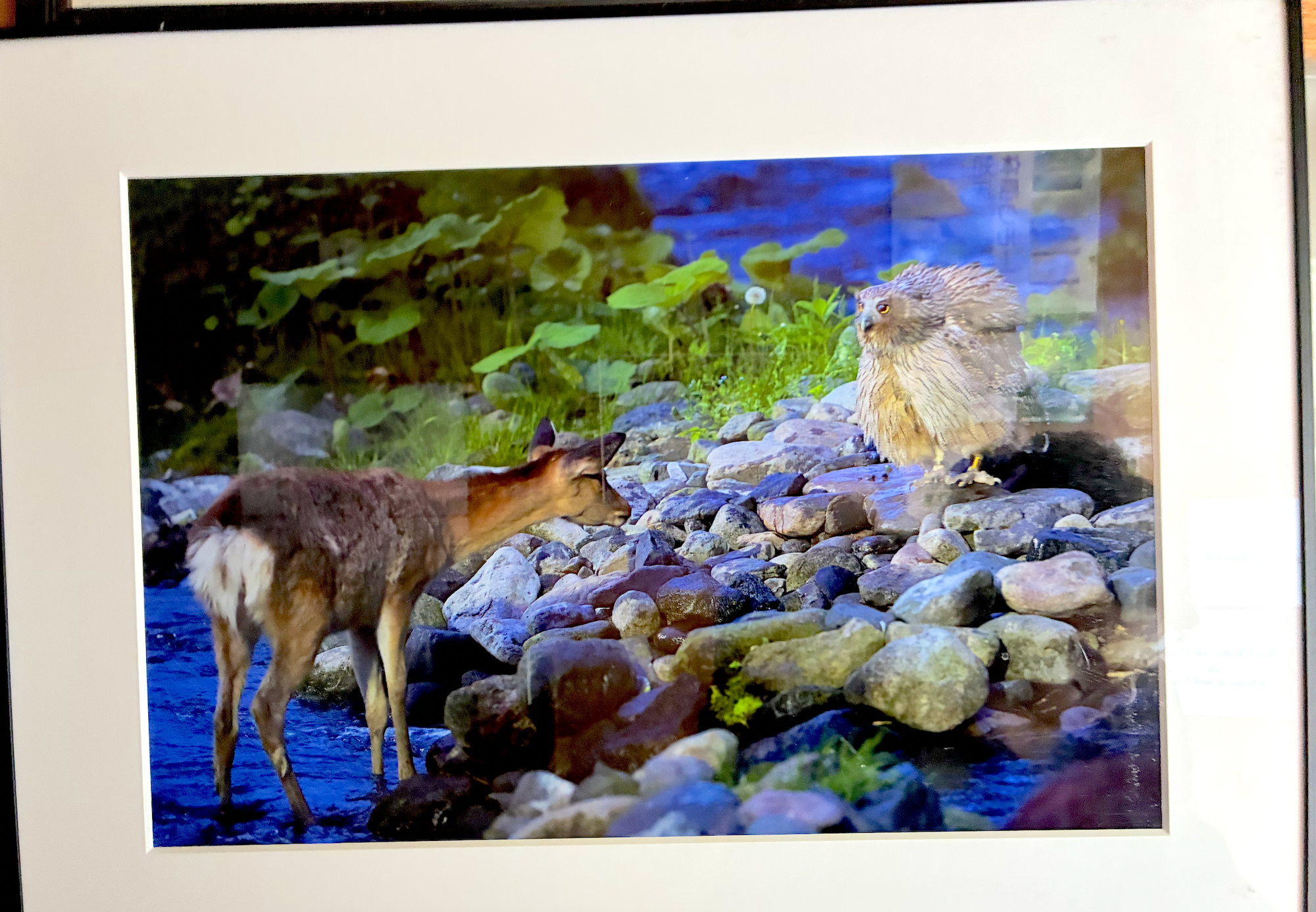
- foxes and deers are very common
- Brown dippers at the river in the morning
- There is large salmons in the river in front of the inn
Getting there
The easiest way to get To Washi No Yado Inn is by car. If you do not have a car, it would be a 35min walk from Rausu Town along the road, but public transport to Rausu town is limited and season dependent.
The inn no longer serve meals. You can bring takeaways from the nearby Seicomart Fujimi (about 2.2km away from the inn) and eat in the observation cabin at the dining tables provided. There seems to be a communal fridge.
Observing Cabins
There are 2 observing cabins, one is the main observing hide with seats and large windows. The other observing cabin is a repurposed van which gets another view of the river. There seems to be a heater inside the van, not sure if operational. You can open the cabin windows to put your camera lens through.
It is a heated hide with good wifi signal. You can even read a book while waiting for the owl to show up.
There is a dining table at the back of the main cabin where you can have your meals. The pantry has a microwave, eating utensils and free drinks (coffee, tea, water). There is also a communal fridge. The toilet in the cabin was decent. This is probably the most comfortable bird hide I have been to. You can essentially camp here all night.
The owls come almost every day, but as with all wildlife, their visits are not guaranteed. There can be stretches of days that the owl does not come. You can check the logbook for recent owl timings. Owl visits are meticulously recorded daily with detailed descriptions. You can even read about the number of fish each owl ate during the visit. During some seasons, you can expect the owl to come only after midnight. You can call before arriving to ask about the recent owl observation timings.
The owl may come as early as 4.30pm (dependent on season and recent logged sightings.), so checking in early and setting your camera up before 5pm is recommended.
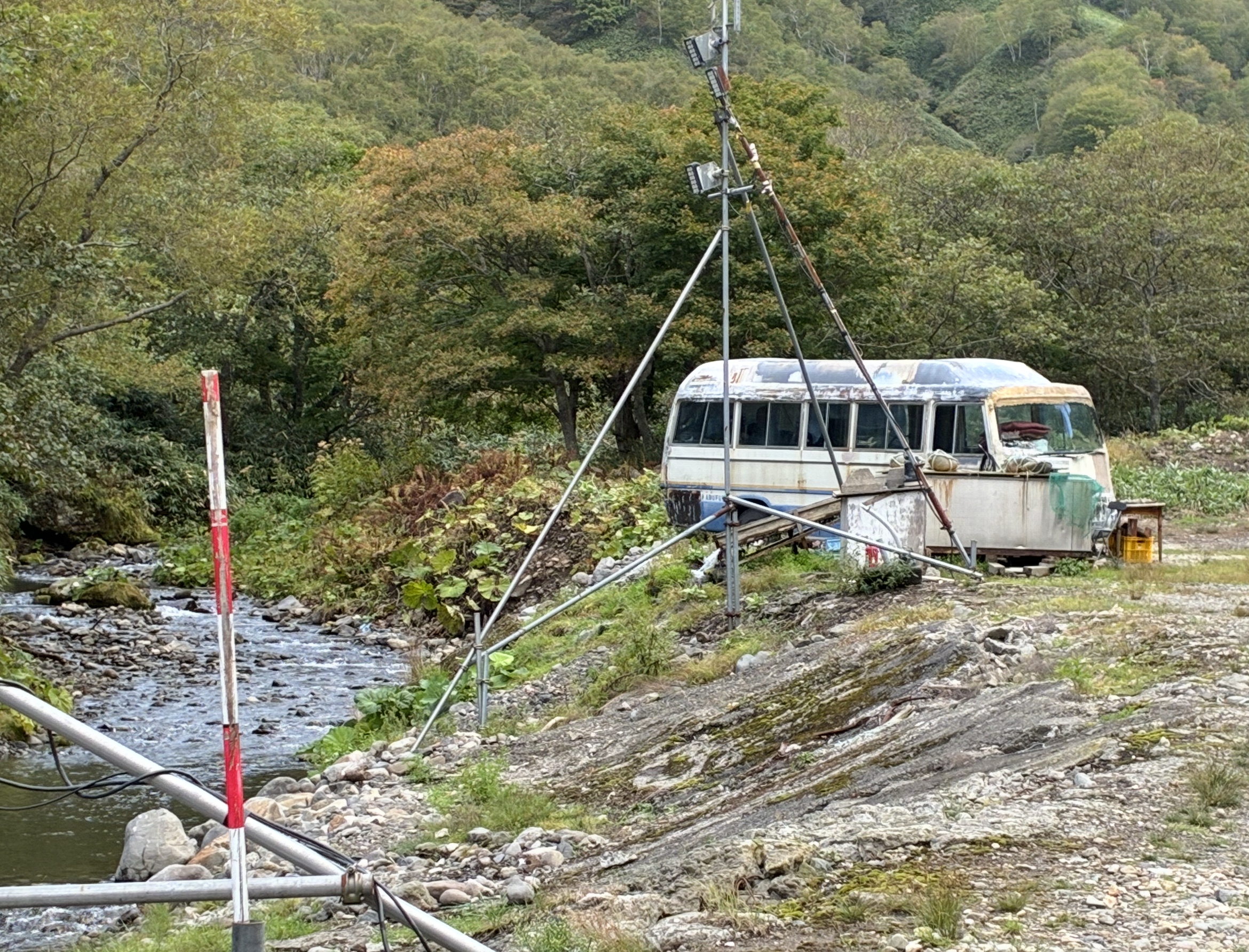
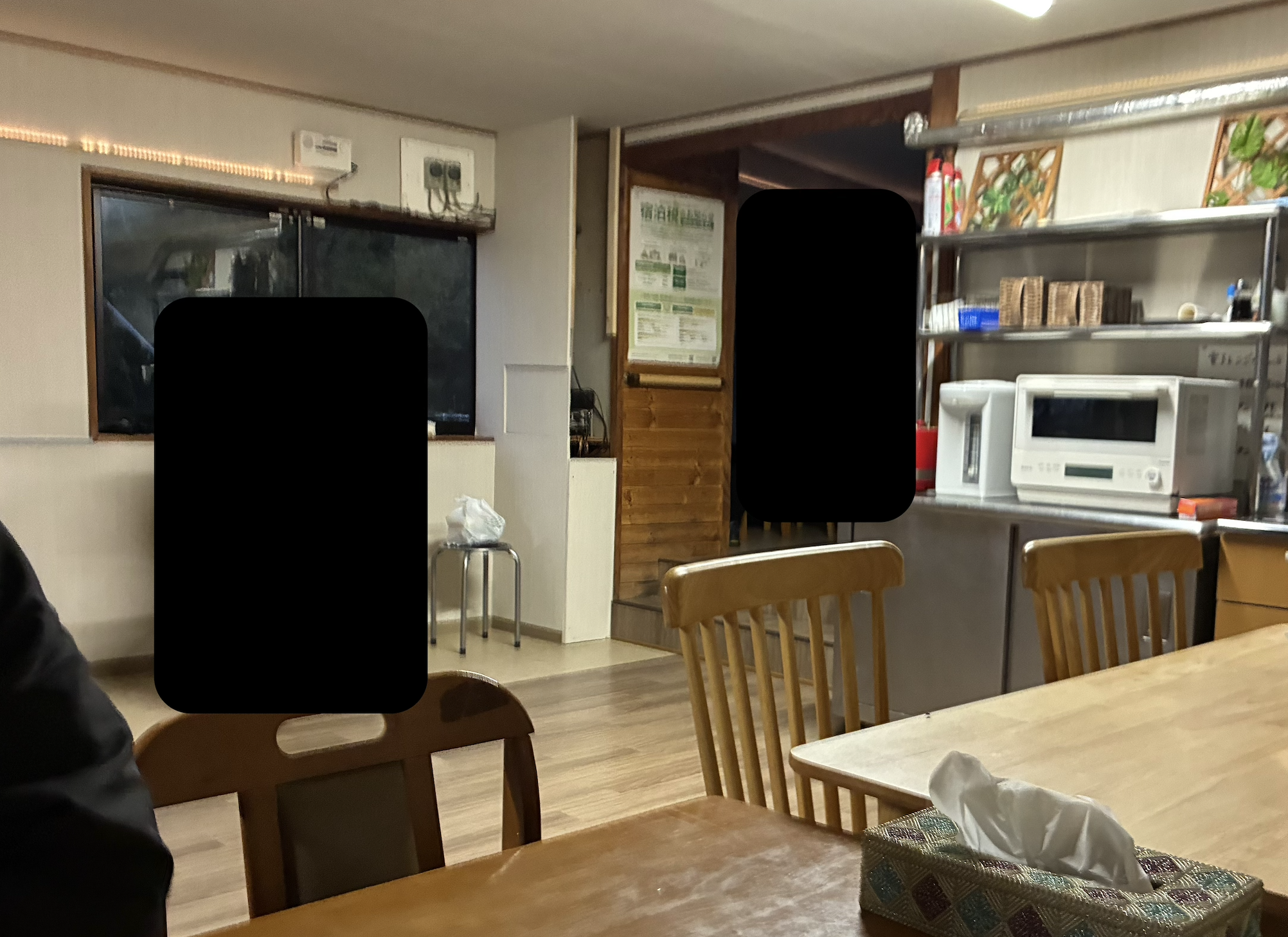
left: the second cabin in a repurposed van. right: pantry in main cabin.
Camera setup. and settings:
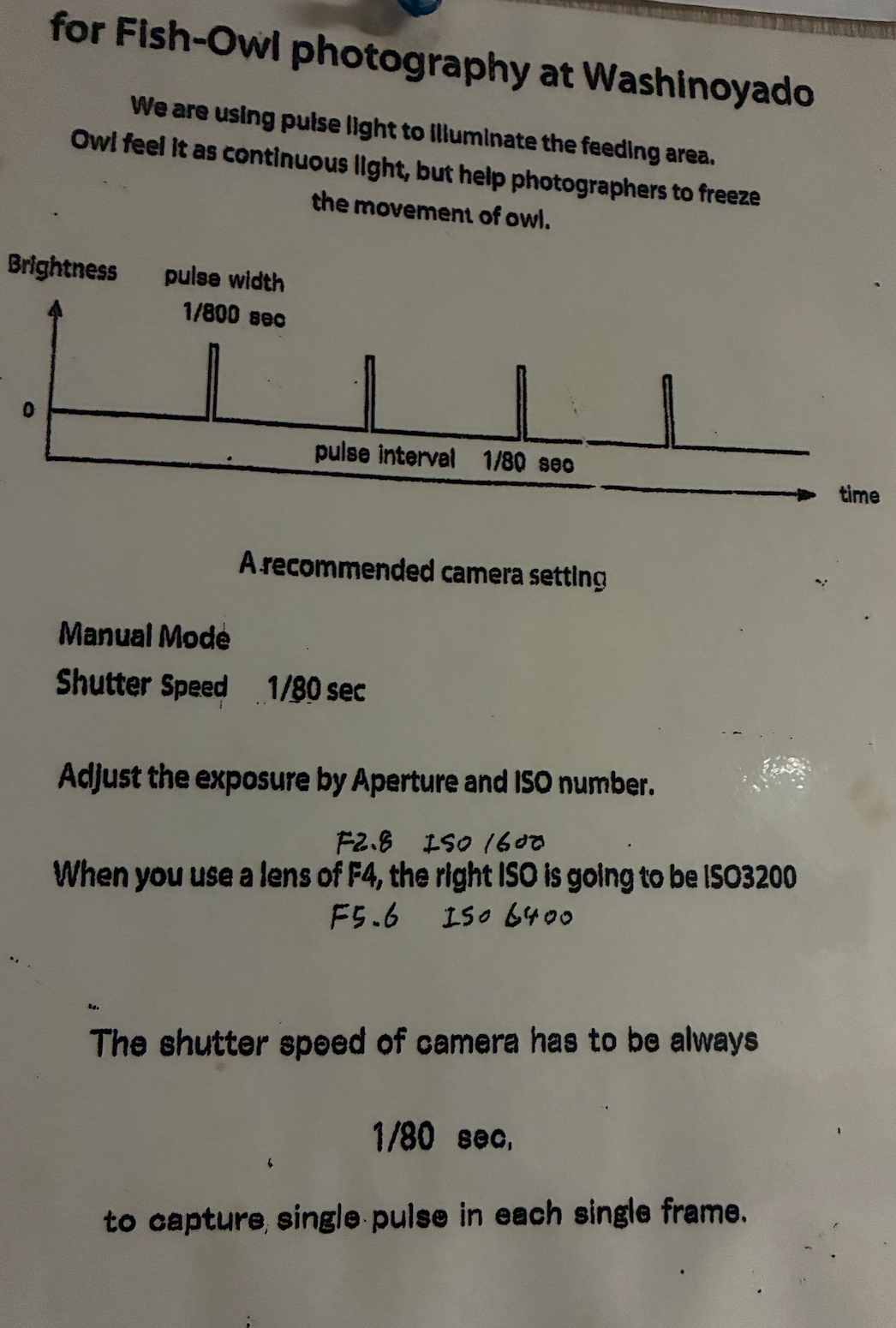
Tips
- Check in early to set up gear before 5pm.
- 3 of the bedrooms in the lodge have windows facing the river to observe the owl. The best bedroom for owl observation is the one nearest to the observing cabin. But the observing cabin still gets the best view in my opinions.
- wear warm clothes as there can be cold wind when you open the window to put your camera lens through.
- Book the rooms a few months in advance to guarantee a room as they often sell out early.
Lodge
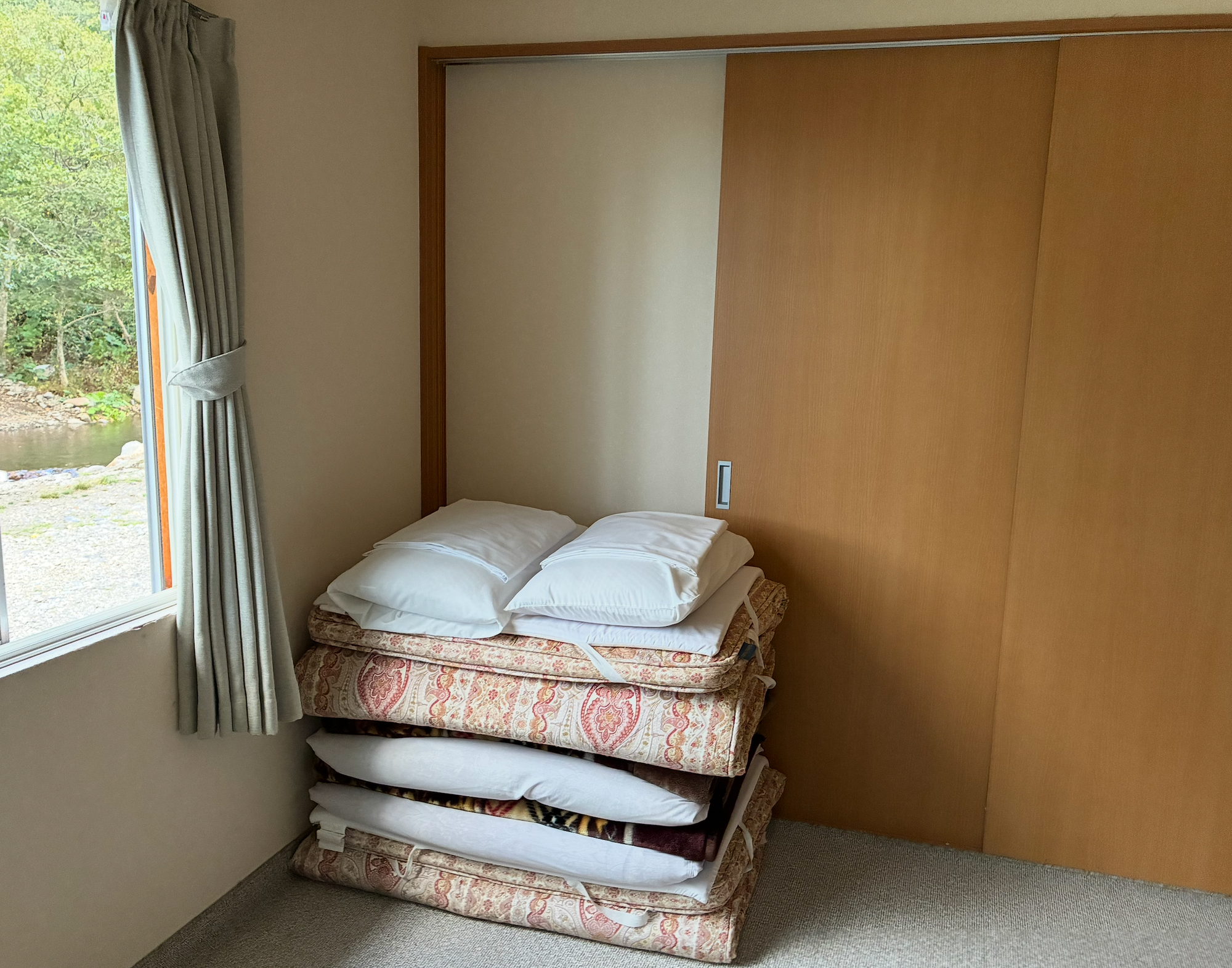
The place is a little dated and definitely not luxury. The rooms are clean, but for the beds, it would be mattresses on the floor. The shower is shared amongst the rooms and is very basic. It is said to be a non-smoking room but the lodge corridors smell heavily of cigarette smoke but the rooms are fine.
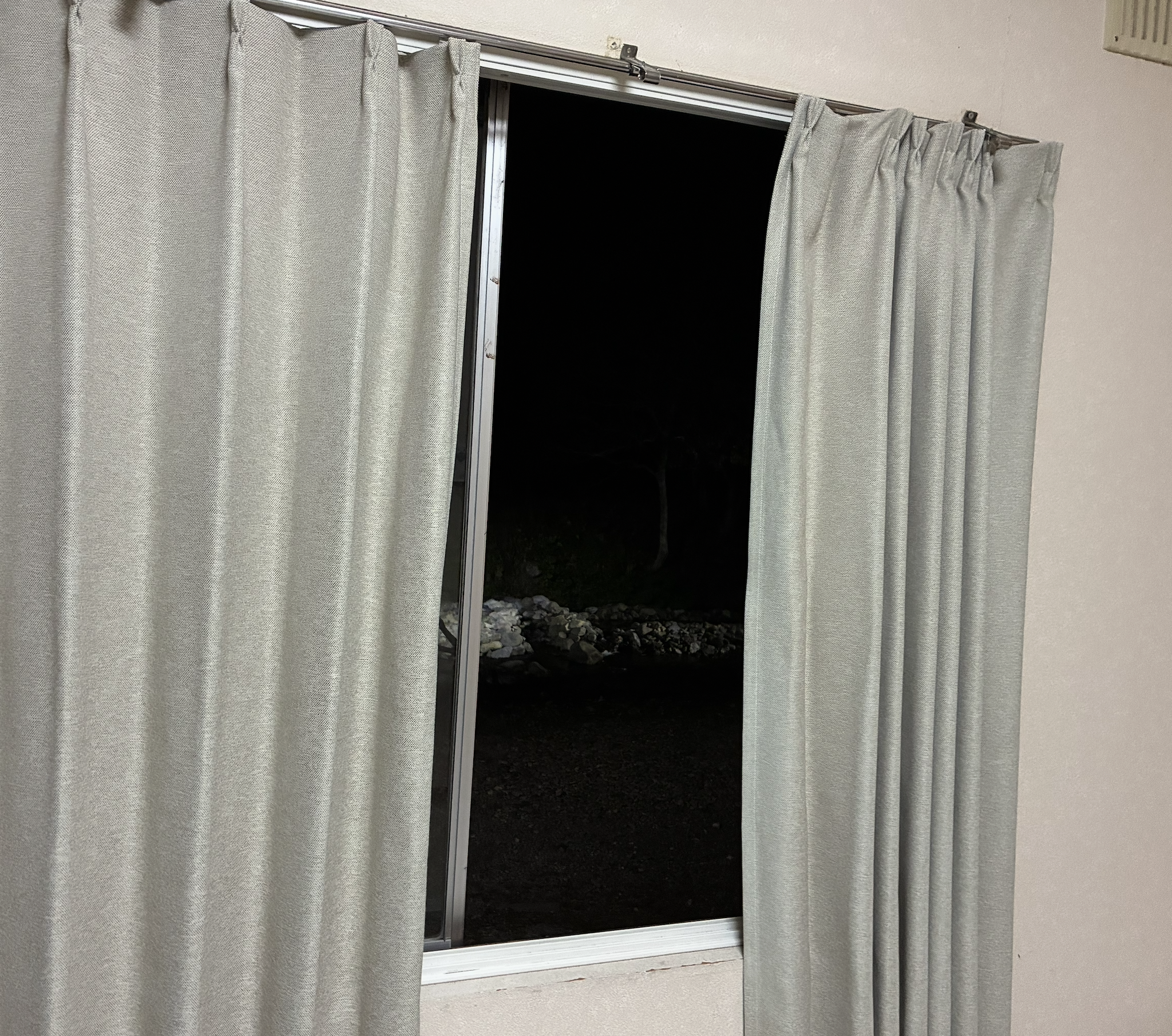
From the bedroom window, you can watch and photograph the owls come all night. There is a heater, but it is not needed in summer and autumn as the blankets are thick.
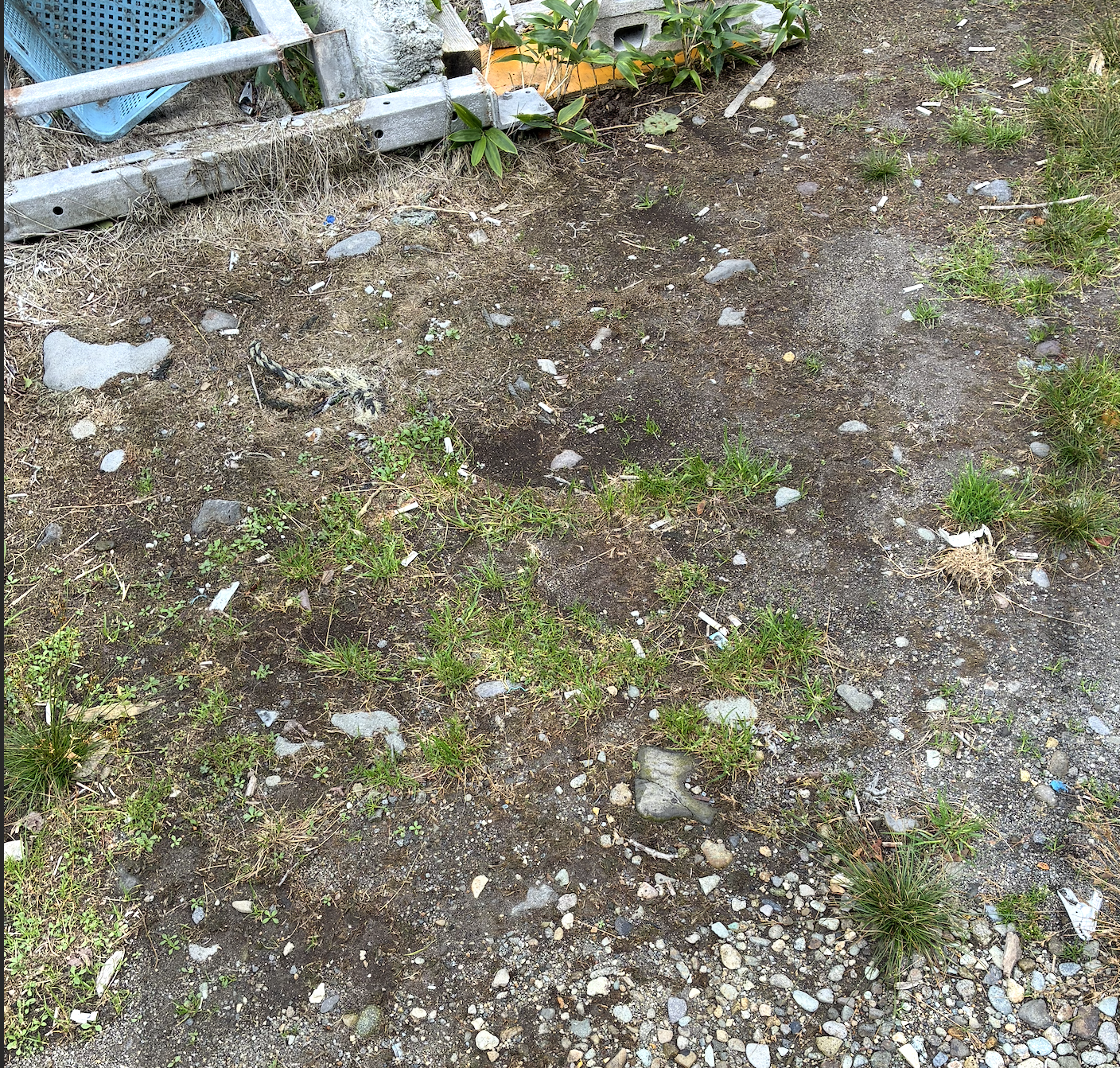
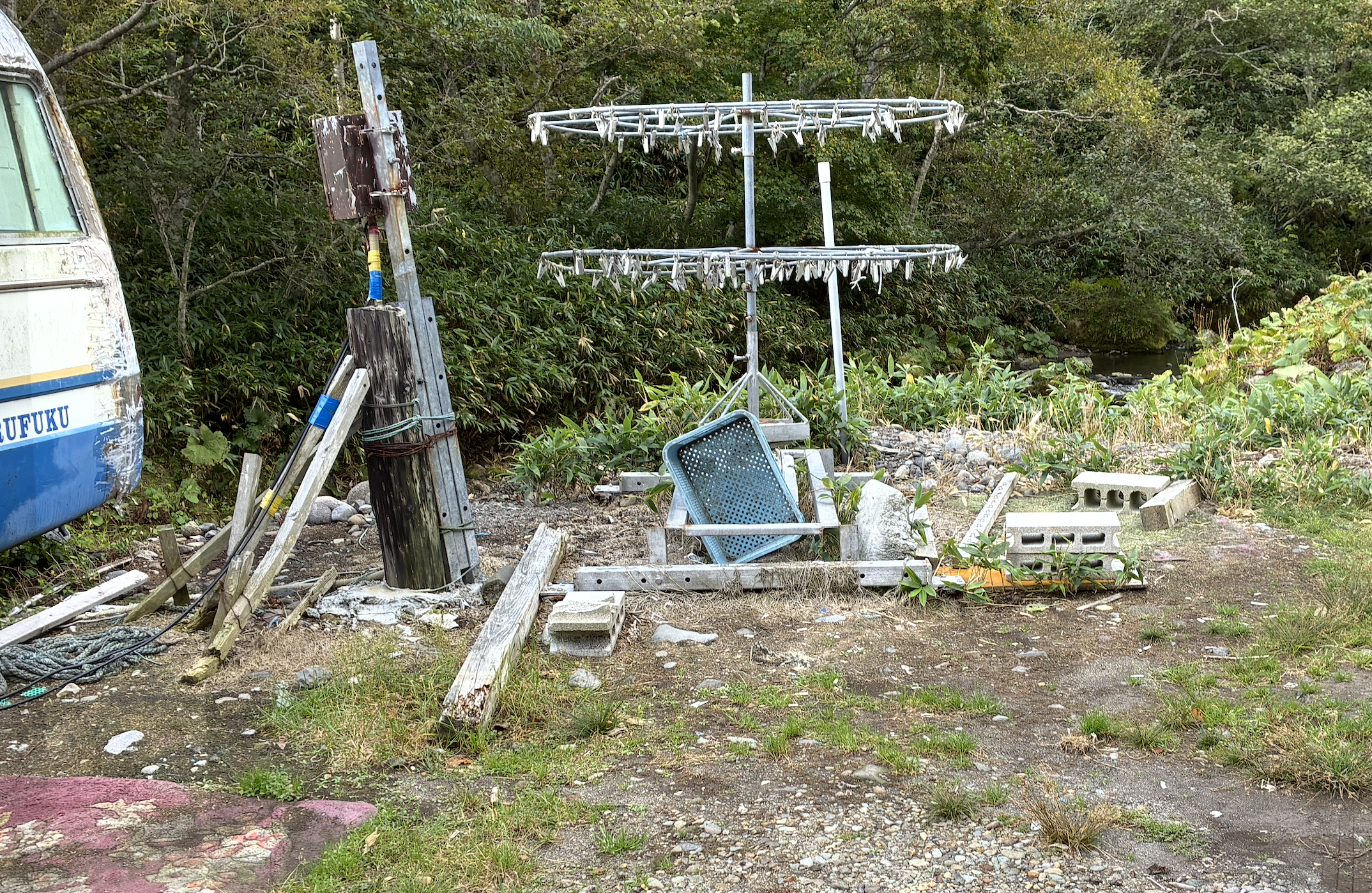
Littered cigarettes. Unfortunately, despite being a place highly frequented by wildlife, the ground is heavily littered with cigarette butts. There is a long overdue cleanup for this place.
I recommend reading this interesting paper about the Blakiston Fish Owl conservation in Hokkiado.